
Nurses often spend more time directly observing patients than other healthcare providers, making their role in monitoring, medication, documentation, and communication especially important.
Nursing negligence can happen when a nurse provides improper care, misses a serious change, or fails to monitor a patient closely enough. If that causes serious harm, Shebell & Shebell’s medical malpractice attorneys in New Jersey can help review what happened.
What is Nursing Negligence? A Definition
Nursing negligence occurs when a nurse fails to provide the level of care reasonably expected under the circumstances and that failure causes harm to a patient.
Negligence can involve something a nurse did incorrectly, but it can also involve something the nurse failed to do.
Examples may include:
- Failing to properly assess a patient
- Failing to monitor a patient over time
- Missing signs that a patient is deteriorating
- Failing to report abnormal findings
- Not escalating concerns when a physician does not respond
- Administering medication incorrectly
- Failing to follow physician orders or safety protocols
- Failing to properly document care
Not every mistake or poor medical outcome is automatically nursing negligence. The key question is whether the nurse’s care fell below the level reasonably expected under the circumstances and whether that failure actually contributed to the patient’s injury.
Duty

A nurse caring for a patient has a professional responsibility to provide appropriate nursing care.
The specific duties depend on the patient, the setting, the nurse’s role, physician orders, hospital policies, and the patient’s medical condition.
Breach
A breach occurs when the nurse’s actions or failure to act fall below the applicable standard of care.
For example, a nurse may breach that duty by repeatedly failing to check a high-risk patient’s vital signs despite orders requiring continued monitoring.
Causation
The negligent act must also be connected to the patient’s injury.
If a nurse failed to monitor a patient but that failure had no effect on the eventual outcome, there may be no malpractice claim based on that mistake alone.
Damages
The patient must have suffered actual harm.
That may include additional medical treatment, a longer hospitalization, permanent disability, lost income, pain, or other physical and financial losses.
Examples of Nursing Negligence
There are many different examples of negligence in healthcare involving nurses, but most fall into a few recurring categories.
Failure to Monitor a Patient
Failure to monitor is one of the most important forms of nursing negligence because many hospitalized patients are not medically stable.
A single assessment only shows what the patient looked like at that moment. Monitoring shows whether the patient is improving, remaining stable, or getting worse over time.
Depending on the patient, nurses may be responsible for continuing to monitor:
- Blood pressure
- Heart rate
- Oxygen saturation
- Respiratory rate
- Neurological status
- Blood glucose
- Pain levels
- Surgical wounds
- Bleeding
- Urine output
- Fetal heart rate
- IV lines and drains
- Feeding tubes and catheters
- Response to medication
Examples of a failure to monitor may include not rechecking dangerously low blood pressure after surgery, failing to watch oxygen saturation in a patient with respiratory problems, or not reassessing a patient after administering opioids or sedatives.
The same problem can occur when a patient shows early signs of internal bleeding or sepsis but repeated warning signs are not recognized.
A nurse may not be responsible for diagnosing the exact condition. However, nurses are often expected to recognize concerning changes, document them, and make sure the appropriate provider is notified.
According to current CNA/NSO closed-claim data cited in nursing malpractice research, monitoring allegations represented 4.3% of paid closed professional liability claims, while assessment allegations accounted for 9.7%. These figures describe patterns within that specific claims dataset rather than the rate of nursing errors nationwide.
Failure to Recognize or Report a Change in Condition
Monitoring only helps if someone acts on what it shows.
A nurse may observe a change in a patient’s condition but fail to recognize its significance or fail to communicate it to the physician.
Warning signs may include:
- New chest pain
- Falling blood pressure
- Rapid heart rate
- Shortness of breath
- Confusion
- Heavy bleeding
- Sudden severe pain
- Fever
- Abnormal lab results
- Declining consciousness
For example, a postoperative patient may develop worsening pain, low blood pressure, and an increasing heart rate. Those findings can require further evaluation rather than simply being charted and ignored.
Nurses are often the first members of the care team to see these changes. A failure to communicate them can delay diagnosis and treatment.
Failure to Escalate Care
There are situations where simply notifying one physician may not be enough.
If a patient continues to deteriorate and the initial response does not address the problem, hospital policies or nursing standards may require additional escalation.
Depending on the circumstances, that could involve contacting:
- A charge nurse
- A nursing supervisor
- Another physician
- A rapid response team
- Emergency services
This is sometimes called using the chain of command.
The issue is not that nurses are expected to override physicians. The issue is whether a serious and continuing change in the patient’s condition required further action when the first response was clearly not resolving the problem.
Medication Errors
Nurses frequently administer medications, making medication safety another major area of potential negligence.
Examples include:
- Giving the wrong medication
- Giving the wrong dosage
- Giving medication to the wrong patient
- Using the wrong route
- Missing a scheduled medication
- Giving medication at the wrong time
- Failing to check a documented allergy
- Failing to monitor the patient after administration
Medication administration represented 8.2% of paid closed claims in the CNA/NSO-based dataset discussed above.
Some medication mistakes result in little or no injury. Others can cause respiratory depression, dangerous changes in blood sugar, allergic reactions, organ damage, or death. Learn more about incorrect medication dosage claims in New Jersey here.
Documentation and Communication Errors
Nursing documentation is part of patient care, not simply administrative paperwork.
Other providers may rely on nursing notes to understand what happened during the previous shift, when symptoms started, what medications were given, and whether the patient’s condition changed.
Negligence may involve:
- Failing to document abnormal findings
- Missing nursing assessments
- Inaccurate medication records
- Failing to record a patient’s complaints
- Poor communication during shift changes
- Failing to notify a physician about deterioration
- Missing documentation of continued monitoring
Poor documentation does not automatically prove negligence. However, missing or inaccurate records can make it difficult to determine whether required care was actually performed and whether important information reached the next provider.
Other Examples of Nursing Negligence
Nursing negligence can also involve:
- Failure to prevent a foreseeable patient fall
- Improper wound care
- Infection-control failures
- Improper use of medical equipment
- Errors involving IVs, drains, feeding tubes, or catheters
- Failure to follow physician orders
- Inadequate discharge instructions
- Failure to reposition a patient at risk for pressure injuries
- CRNAs can also be responsible for anesthesia-related negligence if they give the wrong dose, fail to monitor the patient, or miss dangerous changes during a procedure.
The exact standard of care will depend on the patient and clinical setting.
How Common Are Nursing Negligence Claims?
There is no reliable statistic showing exactly how many instances of nursing negligence occur nationwide each year.
Malpractice claim databases provide useful information about patterns, but they should not be confused with a complete count of every nursing mistake or lawsuit.
The CNA/NSO closed-claim data referenced in nursing malpractice research includes claims involving nurses and businesses insured through that particular program. The source itself cautions that it is not a national census of nursing malpractice cases.
Within that dataset, the most common allegation categories included:
- Treatment and care: 56.2%
- Assessment: 9.7%
- Medication administration: 8.2%
- Monitoring: 4.3%
The claims also occurred across many different nursing settings.
Home healthcare represented 21.7% of paid closed claims, followed by adult medical care and gerontology/aging services at 12% each. Surgical nursing represented 9.4%, emergency and urgent care 6.4%, and obstetrics 3.9%.
These numbers should not be interpreted to mean that one nursing specialty is necessarily more negligent than another. Claim frequency can be influenced by the type of patients being treated, the seriousness of potential injuries, and whether an error ultimately results in a significant malpractice claim.
Nursing Negligence vs. Medical Malpractice: The Difference
Nursing negligence and medical malpractice are closely related concepts, and the terms are often used together when a patient is injured by substandard nursing care.
The distinction is easier to understand by looking at the conduct first and the legal claim second.
Nursing Negligence
Nursing negligence describes the nurse’s conduct.
The question is whether the nurse acted—or failed to act—in a way that fell below the level of care reasonably expected under the circumstances.
For example, negligent nursing conduct might include:
- Failing to monitor abnormal vital signs
- Administering the wrong medication
- Missing signs of infection
- Failing to contact a physician
- Not using the chain of command when a patient continues to deteriorate
The focus is on what happened during the patient’s care.
Medical Malpractice
Medical malpractice is the broader legal context involving professional negligence by healthcare providers.
Doctors, nurses, hospitals, nurse practitioners, and other healthcare professionals can all potentially be involved in medical malpractice claims when care falls below accepted professional standards and causes injury.
Medical malpractice does not require that a nurse intended to hurt the patient.
Consider a simple example.
A nurse caring for a postoperative patient repeatedly records low blood pressure and a rising heart rate but does not notify the surgeon, reassess the patient, or escalate the situation. Several hours later, the patient suffers serious complications from internal bleeding.
Nursing negligence is the failure to adequately monitor, recognize, communicate, and respond to the patient’s deterioration.
If medical evidence shows that this failure violated the applicable nursing standard of care and that earlier intervention likely would have prevented or reduced the injury, that conduct may form the basis of a medical malpractice claim.
That distinction is more useful than treating negligence and malpractice as completely separate types of mistakes. In many cases involving nurses, negligent nursing care is the conduct that gives rise to the malpractice case.
Why Does Nursing Negligence Happen?
Nursing negligence can result from an individual mistake, but it can also develop from larger problems within a hospital or healthcare facility. Heavy workloads, poor communication, inadequate training, and weak safety procedures can all increase the risk of something being missed.
None of these circumstances automatically excuse negligent care. The question is still whether the care provided met the standard reasonably expected under the circumstances.
Staffing and Heavy Patient Assignments
Nurses may be responsible for several patients at once, each with different medications, monitoring requirements, and medical risks.
When assignments become difficult to manage, important tasks can be delayed or missed, including:
- Rechecking abnormal vital signs
- Administering medications
- Responding to call lights
- Documenting care
- Reassessing symptoms
- Communicating changes to physicians
Understaffing may also point to broader problems involving the hospital or facility, depending on how staffing decisions affected the patient’s care.
Fatigue and Rushed Care
Nursing can involve long, demanding shifts in fast-moving clinical environments.
Fatigue and time pressure can contribute to medication mistakes, incomplete assessments, missed warning signs, and poor communication. A rushed handoff at the end of a shift can be especially dangerous when the incoming nurse does not receive important information about a patient who has already begun to deteriorate.
Communication Failures
Safe nursing care depends heavily on information moving between the right people at the right time.
Breakdowns may occur between:
- A nurse and physician
- Nurses changing shifts
- Bedside nurses and specialists
- Different hospital departments
- Nurses and supervising staff
A nurse may recognize an abnormal finding but fail to report it. A physician may issue new instructions that never reach the next shift. One department may assume another is monitoring a problem.
Small communication failures can become serious when they delay necessary treatment.
Training and Experience Problems
Some nursing errors involve a provider who was not adequately prepared for the task being performed.
Problems may include inadequate training, unfamiliarity with medical equipment, insufficient supervision, or performing duties outside the nurse’s appropriate role or experience.
Hospitals and other healthcare facilities may also have responsibilities related to training and supervision.
Failure to Follow Protocols
Healthcare facilities commonly use protocols intended to prevent avoidable mistakes.
Depending on the situation, these may address:
- Patient monitoring
- Fall precautions
- Medication verification
- Infection control
- Escalation procedures
- Documentation requirements
When an established safety procedure is ignored or repeatedly skipped, the risk of patient harm can increase.
Who Can Be Responsible for Nursing Negligence?
A nursing negligence case does not always involve one person.
The medical records may show that several providers interacted with the patient while their condition worsened. Determining responsibility often requires looking at who knew what, when they knew it, and what each provider did in response.
The Nurse
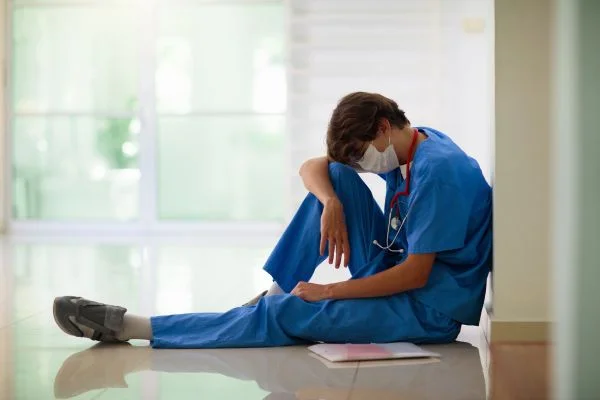
A nurse may potentially be responsible when their own actions or omissions fall below the applicable standard of care.
Examples could include failing to monitor a patient, administering medication incorrectly, ignoring abnormal findings, failing to notify a physician, or not escalating care when the patient continues to deteriorate.
Supervisors and Other Healthcare Providers
Other members of the care team may also be involved.
Depending on the facts, that could include:
- Supervising nurses
- Physicians
- Nurse practitioners
- Specialists
- Other nurses involved in the patient’s care
For example, a bedside nurse may report concerning symptoms to a physician, but the physician fails to respond appropriately. If the patient continues getting worse, questions may arise about both the physician’s response and whether additional escalation should have occurred.
Hospital or Healthcare Facility
The hospital or facility may also become part of the case, particularly when the nurse was an employee or the negligence reflects a broader system problem.
Potential issues may involve:
- Staffing levels
- Employee training
- Supervision
- Patient-monitoring systems
- Communication procedures
- Safety protocols
- Response and escalation policies
Responsibility depends on the specific facts, including the relationship between the healthcare professionals and the facility. A nursing error does not automatically make every provider or hospital involved legally responsible.
Proving Nursing Negligence in New Jersey
A patient generally needs more than proof that something went wrong.
The evidence must help establish what nursing care should have been provided, how the actual care differed from that standard, and whether the difference caused the patient’s injury.
Evidence That May Matter
Medical records are often central to a nursing negligence case.
Relevant evidence may include:
- Nursing notes
- Vital-sign records
- Medication administration records
- Physician orders
- Lab results
- Monitoring records
- Electronic medical records
- Call-light information, when available
- Shift-change documentation
- Communications between providers
- Incident reports when legally obtainable
- Photographs
- Medical bills
- Records of corrective treatment
Timing can be especially important in failure-to-monitor cases.
The medical record may help answer questions such as:
When did the patient’s vital signs first become abnormal? When did the nurse recognize the change? When was a physician notified? Was the patient reassessed? Did the condition continue to worsen? Was additional help requested?
A few hours between the first warning sign and treatment can become highly significant when the patient is experiencing internal bleeding, sepsis, respiratory distress, or another rapidly progressing condition.
Medical Expert Review
Nursing negligence cases often require medical professionals to evaluate the applicable nursing standard of care.
An expert may address:
- What a reasonably careful nurse should have done
- Whether the nurse departed from that standard
- Whether the departure contributed to the patient’s injury
New Jersey also has an Affidavit of Merit requirement for many professional negligence actions. Under N.J.S.A. 2A:53A-27, a plaintiff generally must provide an affidavit from an appropriate licensed professional within 60 days after a defendant files an answer, although one additional period of up to 60 days may be allowed for good cause.
There are exceptions and case-specific requirements, so the affidavit issue depends on the allegations and professionals involved.
What Damages Can Result?
The losses in a nursing negligence case depend heavily on the injury that occurred.
Potential damages may involve:
- Additional medical treatment
- Extended hospitalization
- Rehabilitation
- Future medical care
- Lost wages
- Reduced earning capacity
- Pain and suffering
- Permanent disability
- Reduced quality of life
A temporary injury requiring several additional days in the hospital is very different from a monitoring failure that results in brain damage, organ failure, permanent disability, or death.
When negligent nursing care contributes to a patient’s death, wrongful-death-related claims may also become relevant.
What Should You Do If You Suspect Nursing Negligence?
The first priority should be the patient’s health. Questions about what went wrong can be investigated after immediate medical needs have been addressed.
Address the Medical Problem
If the patient is still experiencing complications, seek appropriate medical care.
That may mean asking for another physician, requesting additional evaluation, transferring care, or obtaining treatment from another facility depending on the circumstances.
Request Medical Records
Preserve records connected to the original treatment and any care required afterward.
This may include hospital records, nursing documentation, physician notes, test results, imaging, medication records, discharge paperwork, and records from later providers.
Write Down What Happened
Patients and family members should consider documenting what they remember while the details are still fresh.
Useful information may include:
- Dates and approximate times
- Symptoms
- Conversations with nurses or physicians
- Names of providers
- Delays in receiving care
- Additional procedures or treatment
- Changes in the patient’s condition
- How the injury affected work and daily life
Do Not Rely on the Chart Alone
Medical records are important, but they may not capture every conversation or every period when a patient was waiting for help.
A family member may remember repeatedly telling staff that the patient could not breathe. A patient may remember reporting severe pain hours before a physician was contacted.
Those details can help provide context when the formal chart does not tell the entire story.
Frequently Asked Questions About Nursing Negligence
What is the Definition of Nursing Negligence?
Nursing negligence occurs when a nurse fails to provide the level of care reasonably expected under the circumstances and that failure causes harm to a patient.
What Are Common Examples of Nursing Negligence?
Common examples include failure to monitor, medication errors, poor documentation, failure to report changes in condition, improper wound care, and failure to follow safety procedures.
Is Failure to Monitor a Patient Nursing Negligence?
It can be. If required monitoring is missed and that delay contributes to preventable harm, it may support a nursing negligence claim.
What is the Difference Between Nursing Negligence and Medical Malpractice?
Nursing negligence refers to substandard nursing care. If that negligence causes injury and meets the legal requirements for a claim, it may become the basis of a medical malpractice case.
Can a Hospital Be Responsible for a Nurse’s Negligence?
Potentially. Hospital responsibility can depend on the nurse’s employment relationship and whether staffing, training, supervision, or facility policies contributed to the harm.
What Evidence is Used to Prove Nursing Negligence?
Evidence may include nursing notes, vital-sign records, medication records, physician orders, monitoring logs, communications, treatment records, and expert medical opinions.
Nursing Negligence Can Have Serious Consequences
Nurses play a critical role in assessing patients, monitoring changes, administering treatment, documenting care, and communicating concerns. A single missed observation may appear minor on its own, but when a deteriorating patient goes hours without appropriate monitoring, reassessment, or escalation, the consequences can become severe.
If you or a loved one suffered serious harm because of negligent nursing care, Shebell & Shebell’s medical malpractice attorneys in New Jersey can review the medical records, determine how the breakdown occurred, and explain your legal options.