
Slipped and Fall Injury in a Grocery Store: What to Do Next

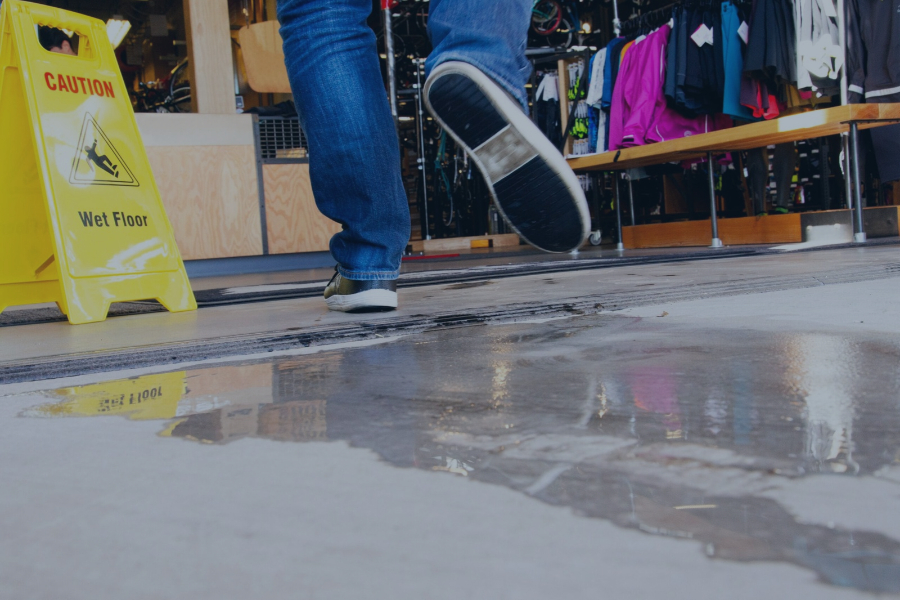
Grocery store slip and falls can happen when spills, loose produce, wet entrances, leaking refrigeration, or restocking activity create hazards for shoppers.
A grocery store is not automatically liable when someone falls. Responsibility depends on how the hazard developed, what the store knew or should have known, and, in some New Jersey cases, whether the hazard was tied to a self-service operation. Shebell & Shebell’s New Jersey slip and fall attorneys can help investigate what happened.
Why Grocery Stores Have Unique Slip and Fall Risks
Unlike an office hallway or other relatively controlled space, grocery store conditions can change from minute to minute. Customers repeatedly pick up and return merchandise, produce can fall from open displays, refrigerated equipment can leak, and food or drink containers can break.
Employees also clean and restock throughout the day. That can introduce wet floors, boxes, pallets, stocking carts, plastic packaging, and other temporary obstacles into areas customers are actively using. At entrances, rain, snow, and slush can be tracked across hard flooring by shoppers and shopping carts.
For liability purposes, it can be useful to distinguish between different types of hazards:
- Temporary hazard: A customer spills a drink shortly before someone falls.
- Recurring hazard: A freezer repeatedly leaks water into the same aisle.
- Store-created hazard: An employee mops a floor or leaves stocking equipment in a customer walkway.
That distinction matters because the origin and history of the condition can affect what the store knew, what it reasonably should have discovered, and whether employees had an opportunity to correct or warn about it. Grocery-store accident sources consistently identify spills, leaking refrigeration, loose produce, wet entrances, cleaning activity, damaged floors, and merchandise in walkways as recurring concerns.
Most Common Causes of Grocery Store Slip and Fall Accidents
Spilled Liquids and Wet Floors
Spilled liquids are among the most obvious grocery store slip hazards, but they can come from many different sources.
A shopper may encounter:
- Spilled milk, juice, soda, or water
- Leaking or broken containers
- Cleaning water
- Recently mopped flooring
- Melted ice
- Wet floors without adequate warnings
Even a relatively small amount of clear liquid may be difficult to see on polished grocery store flooring.
How the liquid reached the floor can become important later. A spill created moments earlier by another customer presents different notice questions from a floor an employee knowingly left wet after cleaning.
Produce and Food on the Floor
Produce departments create a particularly distinctive grocery store hazard because customers routinely handle individual fruits and vegetables.
Potential hazards include:
- Grapes
- Berries
- Lettuce and leafy vegetables
- Loose fruits or vegetables
- Ice
- Food debris
- Water from produce misting systems
Small items can be difficult to see, and some become especially slippery when stepped on or crushed.
The way produce is displayed and packaged can also matter. That issue has played a significant role in New Jersey supermarket cases involving the state’s mode-of-operation doctrine, discussed below.
Leaking Refrigerators and Freezers
Refrigerated and frozen-food sections can create slip hazards through:
- Refrigeration leaks
- Condensation
- Melted ice
- Faulty drainage
- Water collecting around equipment
- Recurring puddles
A one-time puddle and a refrigerator that has been leaking repeatedly are not necessarily the same liability situation.
If equipment has a history of leaking, maintenance reports, employee complaints, previous cleanup records, or repeated incidents may help establish that the store knew or should have known there was an ongoing problem. Competitor material specifically identifies recurring refrigeration problems as potentially important when evaluating notice.
Wet Entrances, Mats, Snow, and Rain
Store entrances can become particularly slippery during bad weather.
Common problems include:
- Rainwater tracked indoors
- Snow and slush melting near doors
- Water pooling in entryways
- Wet entrance mats
- Mats that curl, shift, or bunch up
The presence of rain or snow does not by itself establish that a grocery store was negligent. The circumstances may include how much water accumulated, how long it remained, whether mats or warnings were used, and what reasonable precautions were taken.
Merchandise, Boxes, Pallets, and Other Trip Hazards
Not every grocery store accident involves slipping on a liquid.
Restocking and normal store operations can also create trip hazards such as:
- Stocking carts
- Cardboard boxes
- Pallets
- Plastic packaging
- Fallen merchandise
- Shopping carts
- Equipment extending into walkways
- Narrow or obstructed aisles
Customers naturally look toward shelves, displays, signs, and products while shopping. Objects placed in normal walking paths can therefore create a different type of grocery store fall risk.
Damaged or Uneven Flooring
Heavy foot traffic, shopping carts, equipment, and routine wear can also affect the floor itself.
Potential hazards include:
- Broken or cracked tiles
- Raised flooring edges
- Torn or loose mats
- Uneven transitions between flooring materials
- Damaged thresholds
Lighting can make any of these conditions harder to detect, particularly when a defect blends into the surrounding flooring.
When is a Grocery Store Liable for a Slip and Fall?
A grocery store is not automatically liable because someone slipped or tripped on its property. Liability generally depends on whether the store failed to use reasonable care and whether that failure caused the customer’s injuries.
Several questions can become especially important.
Did the Store Create the Hazard?
When the store or one of its employees created the dangerous condition, the analysis can be different from a spill caused unexpectedly by another customer.
Examples may include:
- An employee mopping the floor
- An employee dropping merchandise
- Stocking equipment left in an aisle
- Debris created while shelves were being restocked
- Water coming from a produce misting system
- A store display that allowed merchandise to fall into a walkway
Evidence showing that store operations directly created the condition can be highly important.
Did the Store Actually Know About the Hazard?
This is commonly referred to as actual notice.
A store may have actual notice when, for example:
- An employee saw the spill
- A customer reported it
- A manager knew a freezer was leaking
- Employees had already begun cleaning the area
- The same problem had generated previous complaints
The issue then becomes what the store did after learning about the danger and whether its response was reasonable under the circumstances.
Should the Store Have Discovered the Hazard?
A store may also face questions about constructive notice—whether the condition existed long enough, or under circumstances where reasonable inspections should have discovered it.
Relevant questions can include:
- How long was the spill or debris on the floor?
- When was the aisle last inspected?
- Did employees pass the condition without addressing it?
- Was it a recurring problem?
- Did the store have an inspection procedure?
- Were employees actually following that procedure?
This is why the amount of time a hazard existed can become so important. A drink spilled seconds before a fall may present a very different case from a puddle that remained in an aisle while multiple employees walked past it. Inspection records, witnesses, and surveillance footage can help answer those questions.
New Jersey’s Mode-of-Operation Rule and Grocery Stores
New Jersey’s mode-of-operation rule is particularly relevant to grocery store accidents because it developed in part through supermarket cases.
Normally, premises liability may require evidence that a business created a dangerous condition or had actual or constructive notice of it. When New Jersey’s mode-of-operation rule applies, however, a plaintiff is relieved of proving actual or constructive notice of the specific dangerous condition. The doctrine applies in limited self-service situations where the business’s method of operation creates a reasonably foreseeable risk of the type of hazard involved.
The Rule Does Not Apply to Every Grocery Store Fall
Simply falling inside a self-service grocery store does not automatically trigger the mode-of-operation rule.
The New Jersey Supreme Court has emphasized that there must be a connection—or nexus—between the business’s self-service operation and the risk that caused the accident.
That limitation is illustrated by Jeter v. Sam’s Club. The plaintiff slipped on grapes, but Sam’s Club sold those grapes in closed clamshell containers rather than the open bags involved in Nisivoccia. The Supreme Court concluded that the store’s self-service sale of sealed grape containers did not create the necessary foreseeable risk of grapes falling to the floor through ordinary customer handling, so the mode-of-operation rule did not apply.
That distinction is important: the fact that an accident happened in a grocery store is not enough. The way the store operated must have a meaningful connection to the hazard involved.
Does a Wet Floor Sign Prevent a Grocery Store Claim?
Not necessarily.
A wet floor sign can be important evidence that a store attempted to warn customers, but simply placing a sign somewhere in the area does not automatically answer whether the warning was adequate.
Relevant questions may include:
- Was the sign visible before the customer reached the wet area?
- Was it actually near the hazard?
- Could merchandise, carts, or displays block it from view?
- How large was the slippery area?
- Was there a reasonably safe route around it?
- How long had the condition existed?
- Did the store take reasonable steps to remove the hazard?
- Was the sign put out before or after the accident?
For example, a clearly visible sign placed directly beside a recently mopped section may provide a much different warning than a sign positioned around a corner or several aisles away.
The presence, placement, visibility, and timing of a warning all matter when determining whether a store responded reasonably to the condition.
The Evidence That Can Prove What Happened
Grocery store fall cases can turn heavily on evidence that customers never see during an ordinary shopping trip.
The condition that caused the fall may be cleaned within minutes. Video may later be overwritten. Employees may not remember exactly when they inspected an aisle. Preserving evidence early can therefore become extremely important.
Surveillance Video
Surveillance footage can be some of the most useful evidence in a grocery store fall because it may show what happened before the accident, not just the fall itself.
Video may reveal:
- When the spill, produce, or debris appeared
- Who created the hazard
- Whether employees walked past it
- Whether other shoppers encountered it
- When the area was inspected
- Whether warning signs were already present
- How the fall occurred
It may also help establish how long the hazard existed, which can become central to a constructive-notice argument.
Store surveillance systems may routinely overwrite older recordings, so preservation can become time-sensitive.
Inspection and Sweep Logs
Many stores use inspection or cleaning procedures for customer areas.
Relevant records may show:
- When the aisle was last checked
- Which employee inspected it
- How frequently inspections were required
- Whether an inspection was missed
- Whether a hazard had already been reported
These records can be compared with surveillance footage, witness accounts, and the time of the accident.
Maintenance Records
Maintenance records can be particularly important when the accident involves something more permanent or recurring, such as:
- A leaking freezer
- Refrigeration equipment
- Drainage problems
- Damaged flooring
- Entrance doors
- Mats
- Recurring water accumulation
A repair history showing repeated trouble with the same freezer, for example, may be much more informative than simply knowing there was water on the floor when someone fell.
Incident Reports and Prior Complaints
An incident report can document when and where the accident occurred, who was notified, and what employees observed afterward.
Prior complaints or previous incidents involving the same area may also be relevant when determining whether store management already knew about a recurring problem.
Photos and Witnesses
Photos are especially useful because many grocery store hazards can disappear almost immediately.
Useful photographs may show:
- The substance or object that caused the fall
- Its size and location
- Footprints, cart tracks, or other signs the condition had been disturbed
- Nearby displays or refrigeration equipment
- Warning signs—or the lack of them
- Lighting and visibility
- The surrounding aisle
Witnesses may also remember seeing the hazard before the accident, watching employees walk past it, hearing another customer report it, or observing exactly how the fall happened.
Together, surveillance footage, store records, photographs, and witness testimony can help reconstruct the question at the center of many grocery store cases: what did the store know, when should it have known it, and what did it do about the danger?
What Should You Do After a Grocery Store Slip and Fall?
What happens immediately after a grocery store fall can affect both your health and the evidence available later. Spills get cleaned, merchandise gets moved, and surveillance footage may not be kept indefinitely.
Report the Accident
Tell a manager or store employee what happened and where you fell. Ask that the accident be documented in an incident report, and request a copy if the store will provide one.
Stick to what you know. You do not need to guess how long the hazard was there or accept blame for the accident.
Photograph the Hazard Before It Changes
If you can safely do so, photograph the condition before employees clean, move, or repair it.
Useful photos include:
- A close-up of the spill, produce, debris, or flooring defect
- A wider view showing where it was located
- The surrounding aisle or entrance
- Any warning signs and their location
- The area if no warning signs were present
- Nearby refrigerators, freezers, produce displays, or shelving
- Visible injuries
For liquids or debris, wider photos can be especially useful because they show where the hazard was in relation to the path customers normally use.
Get Witness Information
If another shopper or employee saw the fall or noticed the hazard beforehand, get their name and contact information if possible.
A witness may be able to describe how long the condition was present, whether employees had been nearby, or whether someone previously reported the problem.
Seek Medical Treatment
Get appropriate medical care and explain that your injuries resulted from the fall. Medical records can document the injuries, treatment, and symptoms associated with the accident.
Preserve What You Can
Keep anything that may help document what happened or the losses that followed, including your shoes and clothing, shopping receipt, incident information, medical records, bills, and documentation of missed work.
A receipt can be particularly simple but useful evidence that you were shopping at that location around the time of the accident.
Act Quickly on Surveillance Evidence
Grocery stores frequently use surveillance cameras, but recordings may eventually be overwritten through routine storage practices.
Video can be extremely important because it may show the hazard forming, employees passing the area, prior inspections, warning signs, and the fall itself. Promptly seeking preservation of relevant footage can therefore matter.
Common Injuries From Grocery Store Falls
A grocery store fall can cause anything from a relatively minor sprain to an injury requiring surgery or extended rehabilitation.
Common injuries include wrist and arm fractures, ankle and leg injuries, hip fractures, knee and shoulder injuries, back and neck injuries, concussions and traumatic brain injuries, and other sprains, strains, and soft-tissue injuries.
The severity often depends on how the person falls, what part of the body absorbs the impact, and whether the person strikes shelving, equipment, or another hard surface.
What Compensation May Be Available?
If a grocery store’s negligence caused your injuries, our New Jersey personal injury attorneys can help evaluate the full impact of the accident and the compensation that may be available. When a grocery store or another responsible party is legally liable, compensation may address both financial losses and the physical effects of the injury.
Potential damages can include:
- Medical expenses
- Future medical treatment
- Lost wages
- Reduced future earning capacity
- Pain and suffering
- Disability or lasting physical limitations
- Other documented injury-related financial losses
There is no reliable formula that says a particular grocery store injury is worth a specific dollar amount. The value of a claim depends on factors such as the severity of the injury, treatment required, time missed from work, lasting limitations, evidence of negligence, comparative fault, and the individual facts of the accident.
What If the Grocery Store Says You Were Partly at Fault?
Grocery stores and their insurers may argue that the shopper contributed to the accident.
For example, they may claim that the person was looking at merchandise instead of the floor, using a phone, wearing unsuitable footwear, ignoring a warning sign, or failing to avoid a visible hazard.
New Jersey uses a modified comparative negligence system. An injured person can still recover damages when their share of fault is 50% or less, but the award is reduced by their percentage of responsibility. If the injured person is found more than 50% at fault, they cannot recover damages.
For example, if a shopper were awarded $100,000 but found 20% responsible for the accident, the recoverable damages would be reduced by 20%.
The store’s accusation does not determine fault by itself. Surveillance footage, the location and visibility of the hazard, warning signs, inspection records, witness accounts, and the shopper’s actions can all matter.
How Long Do You Have to File a Grocery Store Injury Claim in New Jersey?
New Jersey generally requires a personal injury lawsuit to be filed within two years after the claim accrues, subject to exceptions. This deadline comes from N.J.S.A. 2A:14-2.
That does not mean waiting two years is a good idea. The practical deadline for preserving evidence can be much shorter because surveillance video may be overwritten, spills disappear, damaged flooring can be repaired, employees may leave, and witness memories fade.
Frequently Asked Questions About Grocery Store Slip and Falls
Can I Sue a Grocery Store if I Slip on a Spill?
Potentially. A successful claim generally requires evidence connecting the store’s negligence to the dangerous condition and your injuries. Depending on the circumstances, evidence about who created the spill and whether the store knew or should have known about it may be important.
How Do I Prove How Long a Spill Was on the Floor?
Surveillance footage, witness testimony, inspection logs, employee activity, and the appearance of the spill may provide evidence about how long it existed. There is rarely one piece of evidence that answers the question by itself.
What if I Slipped on a Grape or Other Produce?
The circumstances matter. New Jersey’s mode-of-operation doctrine has been applied in supermarket cases involving self-service produce, but it does not automatically apply every time someone slips on food in a grocery store. The way the product was displayed, packaged, and handled can be important.
Does a Wet Floor Sign Prevent Me From Filing a Claim?
No. A warning sign may be relevant, but its presence does not automatically eliminate a claim. Its visibility, placement, timing, and relationship to the actual hazard all matter.
Can I Recover if Another Customer Caused the Spill?
Potentially. A store does not necessarily escape responsibility simply because another customer created the hazard. The issue may become whether the store knew about the spill or whether it remained long enough that reasonable inspection procedures should have discovered it.
What if I Fell in the Grocery Store Parking Lot?
Responsibility may depend on who owned, controlled, or was responsible for maintaining the parking lot. In a shopping center, that could be the grocery store, landlord, property owner, management company, or another party depending on the circumstances.
How Long Do I Have to Sue a Grocery Store in New Jersey?
New Jersey generally provides two years for personal injury actions, although exceptions can apply. Evidence can disappear much sooner, so the legal filing deadline should not be confused with how quickly an accident should be investigated.
Speak With Shebell & Shebell After a Grocery Store Fall
A grocery store claim often comes down to details: where the spill came from, how produce was displayed, whether refrigeration equipment had been leaking, when the area was inspected, and what surveillance footage shows. Those details can disappear quickly after the floor is cleaned or the condition is repaired.
If you were seriously injured because of a spill, loose produce, leaking refrigeration, unsafe flooring, or another grocery store hazard, Shebell & Shebell’s New Jersey slip and fall attorneys can investigate the evidence and help determine whether the store or another party may be responsible.