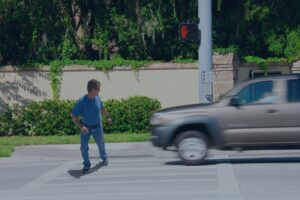


The risks of distracted drivers go far beyond someone “checking a text” behind the wheel. A few seconds of distraction can permanently change a person’s life.
Distracted driving can lead to serious crashes, catastrophic injuries, pedestrian accidents, cyclist injuries, lawsuits, insurance consequences, financial losses, and even criminal charges in severe cases. Many distracted drivers never see the person, cyclist, pedestrian, or vehicle they hit until it is too late.
If you or a loved one were injured by a distracted driver, contact our pedestrian accident attorneys in New Jersey to discuss your legal options.
What Counts as Distracted Driving?
Distracted Driving Definition
Distracted driving is any activity that takes a driver’s eyes, hands, or mind away from driving.
That includes texting, using GPS, eating, drinking, adjusting music, talking on the phone, reaching for objects, or interacting with passengers. Even if the distraction seems small, it can still be dangerous when the vehicle is moving.
The Three Types of Distraction
Distracted driving is usually divided into three main categories.
Visual distraction means the driver takes their eyes off the road. This can happen when someone looks at a phone, GPS screen, passenger, or object inside the car.
Manual distraction means the driver takes one or both hands off the wheel. This can happen while eating, drinking, reaching for something, typing, or adjusting vehicle controls.
Cognitive distraction means the driver’s mind is not fully focused on driving. Phone calls, emotional conversations, daydreaming, stress, and mental fatigue can all affect a driver’s reaction time.
Why Texting Is Especially Dangerous
Texting is one of the most dangerous forms of distracted driving because it combines all three types of distraction at once.
A driver has to look at the phone, use their hands to type or scroll, and think about the message instead of the road. At 55 mph, looking away for 5 seconds is like driving the length of a football field without watching where you are going.
That is more than enough time to miss a stopped car, red light, cyclist, pedestrian, or changing traffic pattern.
The Physical Consequences of Distracted Driving
Rear-End Collisions
Rear-end crashes are one of the most common consequences of distracted driving.
When drivers look down at a phone or lose focus, they may not notice traffic slowing ahead. By the time they look back up, they may not have enough space to brake safely.
These crashes are especially common in stop-and-go traffic, at red lights, near intersections, and on busy highways.
Intersection Accidents
Distracted driving can also cause serious intersection crashes.
A driver who is looking down, adjusting GPS, or not paying attention may run a red light, miss a stop sign, or fail to yield. These crashes can be especially dangerous because vehicles may collide at an angle or at higher speeds.
Pedestrians and cyclists are also at high risk near intersections because distracted drivers may not see them entering or crossing the roadway.
Lane Departure Crashes
Distracted drivers can drift out of their lane without realizing it.
This can cause sideswipe crashes, head-on collisions, or accidents involving vehicles in adjacent lanes. A driver who looks away for even a few seconds may cross a centerline, veer onto the shoulder, or leave the roadway entirely.
Lane departure crashes can become severe quickly because the distracted driver may not correct course until impact is unavoidable.
Pedestrian and Cyclist Injuries
Pedestrians and cyclists are especially vulnerable to distracted drivers because they do not have the same protection as people inside vehicles.
A distracted driver may fail to see a crosswalk, bike lane, stop sign, traffic signal, or person walking near the road. Even at lower speeds, a vehicle can cause catastrophic injuries to a pedestrian or cyclist.
These cases often involve broken bones, head injuries, spinal injuries, surgeries, long recovery periods, and permanent mobility problems.
Catastrophic Injuries and Fatalities
Distracted driving can cause life-changing injuries or death.
Common serious injuries include traumatic brain injuries, spinal cord injuries, broken bones, internal injuries, severe soft tissue damage, and permanent disability. In the worst cases, distracted driving leads to fatal crashes and wrongful death claims.
The most frustrating part is that many of these crashes are preventable.
Real-World Example of Distracted Driving Consequences
Pedestrian Hit in a Crosswalk
One of our case results shows how serious the consequences of distracted driving can be.
An 84-year-old pedestrian was walking home from the grocery store and crossing the street in a marked crosswalk when a distracted driver struck him. The driver reportedly never saw him in the crosswalk.
The victim suffered a severely fractured ankle that required surgery. The case later resulted in a $1.25 million settlement during discovery.
Why These Cases Matter
Distracted driving crashes are often preventable.
When a driver fails to pay attention, vulnerable people can suffer life-changing injuries in an instant. Pedestrians, cyclists, older adults, and children are especially at risk because they have little protection when a vehicle hits them.
A distraction that lasts only a moment can lead to surgery, permanent pain, lost independence, and a long legal claim.
Legal Consequences of Distracted Driving
Traffic Tickets and Fines
Distracted drivers may face traffic tickets and fines, especially for handheld phone use or texting while driving.
Repeat offenses can lead to higher penalties. In some cases, the ticket itself may also become important evidence if the distracted driver caused a crash.
Points and License Consequences
Distracted driving violations can also lead to points on a driver’s license.
Too many points can create additional penalties, including possible license suspension. Novice drivers may face stricter consequences because they are still operating under permit or provisional license rules.
Increased Insurance Costs
A distracted driving violation or crash can also affect insurance.
Drivers may see higher premiums, risk classification changes, or long-term insurance consequences after a distracted driving citation or at-fault crash. For someone who causes serious injuries, the financial impact can be significant.
Civil Liability After a Crash
If distracted driving causes a crash, the driver may be sued for damages.
That can include medical bills, lost wages, pain and suffering, future treatment costs, rehabilitation expenses, and other losses tied to the injury.
In serious cases, civil liability can become much larger than the original traffic ticket or fine.
Criminal Consequences in Severe Crashes
Distracted driving can also create criminal consequences in severe cases.
If a crash causes serious injury or death, the driver may face reckless driving allegations or other criminal charges depending on the facts. The more dangerous the conduct and the more serious the harm, the greater the potential consequences.
How Distracted Driving Affects Injury Claims
Distracted Driving May Prove Negligence
Distracted driving can help show that a driver failed to act safely.
If a driver was looking at a phone, texting, eating, reaching for something, or not watching the road, that behavior may support a negligence claim. In simple terms, it can help show the driver was not using reasonable care behind the wheel.
Evidence Used in Distracted Driving Cases
Evidence is important because distracted drivers do not always admit what they were doing.
Common evidence may include phone records, witness statements, police reports, dashcam footage, traffic camera footage, vehicle data, and driver admissions.
This evidence can help show whether the driver was using a phone, looking down, failing to brake, drifting lanes, or not reacting to obvious hazards.
Why Early Investigation Matters
Early investigation matters because evidence can disappear quickly.
Video footage may be deleted. Witness memories can fade. Phone data may need to be preserved. Vehicles may be repaired or destroyed before key information is reviewed.
The sooner an attorney investigates, the better chance there may be to identify and preserve proof of distraction.
The Emotional and Financial Consequences
Long Recovery Periods
Distracted driving injuries can require long recoveries.
Victims may need surgery, physical therapy, rehabilitation, pain management, mobility support, or follow-up medical care. Some people deal with chronic pain, reduced movement, and long-term limitations after the crash.
For older adults, pedestrians, cyclists, and people with physically demanding jobs, these injuries can be especially disruptive.
Emotional Trauma
The impact is not only physical.
Many crash victims experience anxiety, fear of driving, sleep problems, stress, and symptoms of trauma after an accident. Families may also feel the emotional strain of caring for an injured loved one or dealing with sudden lifestyle changes.
A distracted driving crash can affect someone’s sense of safety long after the visible injuries begin to heal.
Financial Stress
The financial consequences can also be overwhelming.
Victims may face missed work, medical bills, long-term care costs, transportation issues, home assistance needs, and vehicle replacement costs. If injuries affect someone’s ability to work in the future, the financial damage can last for years.
That is why distracted driving cases are not just about the crash itself. They are about the full impact the crash has on a person’s health, income, family, and future.
Distracted Driving Is Often Preventable
Most Distractions Can Wait
Most distracted driving crashes happen because a driver tried to handle something that could have waited.
Texts can wait. Calls can wait. Food can wait. GPS adjustments can wait.
No message, song, snack, or route change is worth risking a serious crash. If something needs immediate attention, the safest choice is to pull over before handling it.
Drivers Should Prepare Before Driving
A lot of distractions can be avoided before the car even moves.
Drivers should set navigation first, put the phone away, adjust music, check mirrors, and handle calls or messages before pulling out. These small habits reduce the temptation to multitask behind the wheel.
Driving requires attention from start to finish. Preparing ahead of time makes it easier to stay focused.
Passengers Can Help Reduce Distractions
Passengers can also play a role in preventing distracted driving.
They can help with directions, change music, answer messages, or handle small tasks so the driver can focus on the road. If the driver is texting, looking down, or not paying attention, passengers should speak up.
A simple “put the phone down” can prevent a crash.
What to Do After a Distracted Driving Accident
Get Medical Care Immediately
After a crash, get medical care as soon as possible, even if your injuries seem minor.
Pain, stiffness, headaches, and soft tissue injuries may not feel serious right away. Some symptoms get worse hours or days later. Medical records also help connect your injuries to the crash.
Document the Scene
If you are able, document as much as possible at the scene.
Take photos of the vehicles, road conditions, traffic signals, skid marks, debris, injuries, and anything else that may help explain what happened. Get witness names and contact information.
Also write down what you noticed about the other driver’s behavior. Were they holding a phone? Looking down? Eating? Swerving? Braking late? Those details may matter later.
Tell Police About Possible Distraction
When police arrive, tell them if you believe the other driver was distracted.
Mention specific behavior, such as phone use, swerving, delayed braking, looking down, drifting lanes, or failing to react to traffic. Do not guess or exaggerate. Just explain what you saw.
That information may become part of the police report and help support the investigation.
Speak With a Car Accident Attorney
Distracted driving cases often require evidence that may not be easy to get on your own.
A car accident attorney can help preserve evidence, investigate liability, review witness statements, look for phone-related proof, and deal with insurance companies.
This matters because insurance companies may try to minimize the crash, dispute fault, or argue that distraction cannot be proven.
Frequently Asked Questions About Distracted Driving Consequences
Can Distracted Driving Cause Criminal Charges?
Yes. Distracted driving can lead to criminal charges, especially when a crash causes serious injury or death.
The exact consequences depend on the facts, the driver’s conduct, and the severity of the harm caused.
Can a Distracted Driver Be Sued?
Yes. If a distracted driver causes a crash, injured victims may be able to pursue compensation through a personal injury claim.
A claim may seek damages for medical bills, lost wages, pain and suffering, future treatment, and other losses connected to the accident.
Are Hands-Free Devices Still Distracting?
Yes. Hands-free devices can still be distracting because they may take the driver’s mind away from the road.
Even if both hands stay on the wheel, cognitive distraction can affect reaction time, judgment, and awareness.
What if the Distracted Driver Says They Were Not Using Their Phone?
A distracted driver may deny using a phone, but that does not always end the issue.
Phone records, witness statements, video footage, crash evidence, vehicle data, and police observations may still help establish distraction.
Distracted Driving has Real Consequences
Distracted driving can lead to devastating physical, emotional, legal, and financial consequences.
Many crashes happen because a driver looked away for only a few seconds. Pedestrians, cyclists, passengers, and other drivers can all suffer serious harm because someone chose not to give the road their full attention.
Distracted driving is preventable. Drivers have a responsibility to stay focused, avoid multitasking, and operate their vehicles safely.
If you were injured because another driver was distracted, our pedestrian accident attorneys in New Jersey can help investigate the crash, protect your rights, and pursue compensation for your injuries.