
Over $200 Million Dollars in Verdicts & Settlements

If we don’t win, you don’t pay

Nursing Negligence: A Complete Guide

Nurses often spend more time directly observing patients than other healthcare providers, making their role in monitoring, medication, documentation, and communication especially important.

Nursing negligence can happen when a nurse provides improper care, misses a serious change, or fails to monitor a patient closely enough. If that causes serious harm, Shebell & Shebell’s medical malpractice attorneys in New Jersey can help review what happened.

What is Nursing Negligence? A Definition 

Nursing negligence occurs when a nurse fails to provide the level of care reasonably expected under the circumstances and that failure causes harm to a patient.

Negligence can involve something a nurse did incorrectly, but it can also involve something the nurse failed to do.

Examples may include:

  • Failing to properly assess a patient
  • Failing to monitor a patient over time
  • Missing signs that a patient is deteriorating
  • Failing to report abnormal findings
  • Not escalating concerns when a physician does not respond
  • Administering medication incorrectly
  • Failing to follow physician orders or safety protocols
  • Failing to properly document care

Not every mistake or poor medical outcome is automatically nursing negligence. The key question is whether the nurse’s care fell below the level reasonably expected under the circumstances and whether that failure actually contributed to the patient’s injury.

Duty

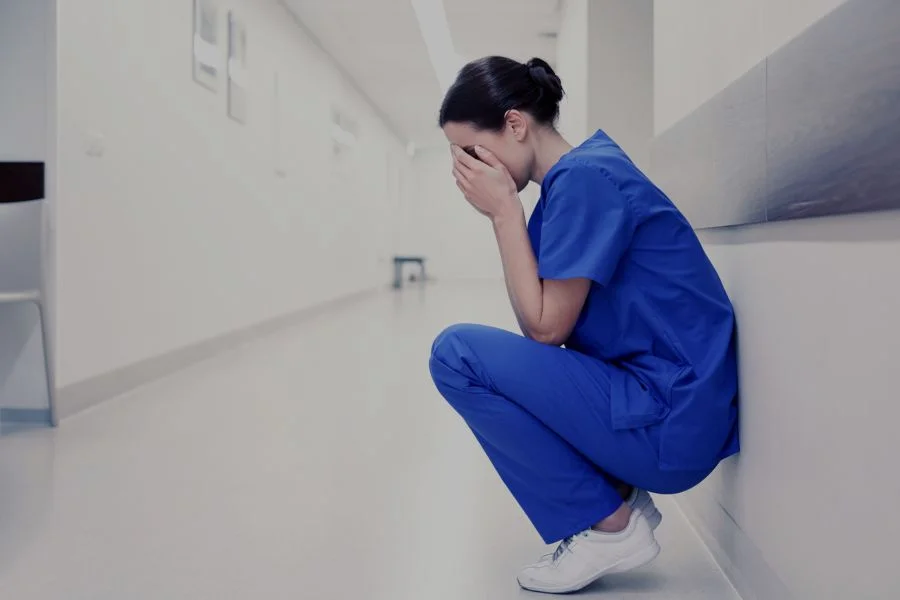
Fatigued hospital nurse after error
A nurse caring for a patient has a professional responsibility to provide appropriate nursing care.

The specific duties depend on the patient, the setting, the nurse’s role, physician orders, hospital policies, and the patient’s medical condition.

Breach

A breach occurs when the nurse’s actions or failure to act fall below the applicable standard of care.

For example, a nurse may breach that duty by repeatedly failing to check a high-risk patient’s vital signs despite orders requiring continued monitoring.

Causation

The negligent act must also be connected to the patient’s injury.

If a nurse failed to monitor a patient but that failure had no effect on the eventual outcome, there may be no malpractice claim based on that mistake alone.

Damages

The patient must have suffered actual harm.

That may include additional medical treatment, a longer hospitalization, permanent disability, lost income, pain, or other physical and financial losses.

Examples of Nursing Negligence

There are many different examples of negligence in healthcare involving nurses, but most fall into a few recurring categories.

Failure to Monitor a Patient

Failure to monitor is one of the most important forms of nursing negligence because many hospitalized patients are not medically stable.

A single assessment only shows what the patient looked like at that moment. Monitoring shows whether the patient is improving, remaining stable, or getting worse over time.

Depending on the patient, nurses may be responsible for continuing to monitor:

  • Blood pressure
  • Heart rate
  • Oxygen saturation
  • Respiratory rate
  • Neurological status
  • Blood glucose
  • Pain levels
  • Surgical wounds
  • Bleeding
  • Urine output
  • Fetal heart rate
  • IV lines and drains
  • Feeding tubes and catheters
  • Response to medication

Examples of a failure to monitor may include not rechecking dangerously low blood pressure after surgery, failing to watch oxygen saturation in a patient with respiratory problems, or not reassessing a patient after administering opioids or sedatives.

The same problem can occur when a patient shows early signs of internal bleeding or sepsis but repeated warning signs are not recognized.

A nurse may not be responsible for diagnosing the exact condition. However, nurses are often expected to recognize concerning changes, document them, and make sure the appropriate provider is notified.

According to current CNA/NSO closed-claim data cited in nursing malpractice research, monitoring allegations represented 4.3% of paid closed professional liability claims, while assessment allegations accounted for 9.7%. These figures describe patterns within that specific claims dataset rather than the rate of nursing errors nationwide.

Failure to Recognize or Report a Change in Condition

Monitoring only helps if someone acts on what it shows.

A nurse may observe a change in a patient’s condition but fail to recognize its significance or fail to communicate it to the physician.

Warning signs may include:

  • New chest pain
  • Falling blood pressure
  • Rapid heart rate
  • Shortness of breath
  • Confusion
  • Heavy bleeding
  • Sudden severe pain
  • Fever
  • Abnormal lab results
  • Declining consciousness

For example, a postoperative patient may develop worsening pain, low blood pressure, and an increasing heart rate. Those findings can require further evaluation rather than simply being charted and ignored.

Nurses are often the first members of the care team to see these changes. A failure to communicate them can delay diagnosis and treatment.

Failure to Escalate Care

There are situations where simply notifying one physician may not be enough.

If a patient continues to deteriorate and the initial response does not address the problem, hospital policies or nursing standards may require additional escalation.

Depending on the circumstances, that could involve contacting:

  • A charge nurse
  • A nursing supervisor
  • Another physician
  • A rapid response team
  • Emergency services

This is sometimes called using the chain of command.

The issue is not that nurses are expected to override physicians. The issue is whether a serious and continuing change in the patient’s condition required further action when the first response was clearly not resolving the problem.

Medication Errors

Nurses frequently administer medications, making medication safety another major area of potential negligence.

Examples include:

  • Giving the wrong medication
  • Giving the wrong dosage
  • Giving medication to the wrong patient
  • Using the wrong route
  • Missing a scheduled medication
  • Giving medication at the wrong time
  • Failing to check a documented allergy
  • Failing to monitor the patient after administration

Medication administration represented 8.2% of paid closed claims in the CNA/NSO-based dataset discussed above.

Some medication mistakes result in little or no injury. Others can cause respiratory depression, dangerous changes in blood sugar, allergic reactions, organ damage, or death. Learn more about incorrect medication dosage claims in New Jersey here.

Documentation and Communication Errors

Nursing documentation is part of patient care, not simply administrative paperwork.

Other providers may rely on nursing notes to understand what happened during the previous shift, when symptoms started, what medications were given, and whether the patient’s condition changed.

Negligence may involve:

  • Failing to document abnormal findings
  • Missing nursing assessments
  • Inaccurate medication records
  • Failing to record a patient’s complaints
  • Poor communication during shift changes
  • Failing to notify a physician about deterioration
  • Missing documentation of continued monitoring

Poor documentation does not automatically prove negligence. However, missing or inaccurate records can make it difficult to determine whether required care was actually performed and whether important information reached the next provider.

Other Examples of Nursing Negligence

Nursing negligence can also involve:

  • Failure to prevent a foreseeable patient fall
  • Improper wound care
  • Infection-control failures
  • Improper use of medical equipment
  • Errors involving IVs, drains, feeding tubes, or catheters
  • Failure to follow physician orders
  • Inadequate discharge instructions
  • Failure to reposition a patient at risk for pressure injuries
  • CRNAs can also be responsible for anesthesia-related negligence if they give the wrong dose, fail to monitor the patient, or miss dangerous changes during a procedure.

The exact standard of care will depend on the patient and clinical setting.

How Common Are Nursing Negligence Claims?

There is no reliable statistic showing exactly how many instances of nursing negligence occur nationwide each year.

Malpractice claim databases provide useful information about patterns, but they should not be confused with a complete count of every nursing mistake or lawsuit.

The CNA/NSO closed-claim data referenced in nursing malpractice research includes claims involving nurses and businesses insured through that particular program. The source itself cautions that it is not a national census of nursing malpractice cases.

Within that dataset, the most common allegation categories included:

  • Treatment and care: 56.2%
  • Assessment: 9.7%
  • Medication administration: 8.2%
  • Monitoring: 4.3%

The claims also occurred across many different nursing settings.

Home healthcare represented 21.7% of paid closed claims, followed by adult medical care and gerontology/aging services at 12% each. Surgical nursing represented 9.4%, emergency and urgent care 6.4%, and obstetrics 3.9%.

These numbers should not be interpreted to mean that one nursing specialty is necessarily more negligent than another. Claim frequency can be influenced by the type of patients being treated, the seriousness of potential injuries, and whether an error ultimately results in a significant malpractice claim.

Nursing Negligence vs. Medical Malpractice: The Difference

Nursing negligence and medical malpractice are closely related concepts, and the terms are often used together when a patient is injured by substandard nursing care.

The distinction is easier to understand by looking at the conduct first and the legal claim second.

Nursing Negligence

Nursing negligence describes the nurse’s conduct.

The question is whether the nurse acted—or failed to act—in a way that fell below the level of care reasonably expected under the circumstances.

For example, negligent nursing conduct might include:

  • Failing to monitor abnormal vital signs
  • Administering the wrong medication
  • Missing signs of infection
  • Failing to contact a physician
  • Not using the chain of command when a patient continues to deteriorate

The focus is on what happened during the patient’s care.

Medical Malpractice

Medical malpractice is the broader legal context involving professional negligence by healthcare providers.

Doctors, nurses, hospitals, nurse practitioners, and other healthcare professionals can all potentially be involved in medical malpractice claims when care falls below accepted professional standards and causes injury.

Medical malpractice does not require that a nurse intended to hurt the patient.

Consider a simple example.

A nurse caring for a postoperative patient repeatedly records low blood pressure and a rising heart rate but does not notify the surgeon, reassess the patient, or escalate the situation. Several hours later, the patient suffers serious complications from internal bleeding.

Nursing negligence is the failure to adequately monitor, recognize, communicate, and respond to the patient’s deterioration.

If medical evidence shows that this failure violated the applicable nursing standard of care and that earlier intervention likely would have prevented or reduced the injury, that conduct may form the basis of a medical malpractice claim.

That distinction is more useful than treating negligence and malpractice as completely separate types of mistakes. In many cases involving nurses, negligent nursing care is the conduct that gives rise to the malpractice case.

Why Does Nursing Negligence Happen?

Nursing negligence can result from an individual mistake, but it can also develop from larger problems within a hospital or healthcare facility. Heavy workloads, poor communication, inadequate training, and weak safety procedures can all increase the risk of something being missed.

None of these circumstances automatically excuse negligent care. The question is still whether the care provided met the standard reasonably expected under the circumstances.

Staffing and Heavy Patient Assignments

Nurses may be responsible for several patients at once, each with different medications, monitoring requirements, and medical risks.

When assignments become difficult to manage, important tasks can be delayed or missed, including:

  • Rechecking abnormal vital signs
  • Administering medications
  • Responding to call lights
  • Documenting care
  • Reassessing symptoms
  • Communicating changes to physicians

Understaffing may also point to broader problems involving the hospital or facility, depending on how staffing decisions affected the patient’s care.

Fatigue and Rushed Care

Nursing can involve long, demanding shifts in fast-moving clinical environments.

Fatigue and time pressure can contribute to medication mistakes, incomplete assessments, missed warning signs, and poor communication. A rushed handoff at the end of a shift can be especially dangerous when the incoming nurse does not receive important information about a patient who has already begun to deteriorate.

Communication Failures

Safe nursing care depends heavily on information moving between the right people at the right time.

Breakdowns may occur between:

  • A nurse and physician
  • Nurses changing shifts
  • Bedside nurses and specialists
  • Different hospital departments
  • Nurses and supervising staff

A nurse may recognize an abnormal finding but fail to report it. A physician may issue new instructions that never reach the next shift. One department may assume another is monitoring a problem.

Small communication failures can become serious when they delay necessary treatment.

Training and Experience Problems

Some nursing errors involve a provider who was not adequately prepared for the task being performed.

Problems may include inadequate training, unfamiliarity with medical equipment, insufficient supervision, or performing duties outside the nurse’s appropriate role or experience.

Hospitals and other healthcare facilities may also have responsibilities related to training and supervision.

Failure to Follow Protocols

Healthcare facilities commonly use protocols intended to prevent avoidable mistakes.

Depending on the situation, these may address:

  • Patient monitoring
  • Fall precautions
  • Medication verification
  • Infection control
  • Escalation procedures
  • Documentation requirements

When an established safety procedure is ignored or repeatedly skipped, the risk of patient harm can increase.

Who Can Be Responsible for Nursing Negligence?

A nursing negligence case does not always involve one person.

The medical records may show that several providers interacted with the patient while their condition worsened. Determining responsibility often requires looking at who knew what, when they knew it, and what each provider did in response.

The Nurse

Stressed male nurse after negligence
A nurse may potentially be responsible when their own actions or omissions fall below the applicable standard of care.

Examples could include failing to monitor a patient, administering medication incorrectly, ignoring abnormal findings, failing to notify a physician, or not escalating care when the patient continues to deteriorate.

Supervisors and Other Healthcare Providers

Other members of the care team may also be involved.

Depending on the facts, that could include:

  • Supervising nurses
  • Physicians
  • Nurse practitioners
  • Specialists
  • Other nurses involved in the patient’s care

For example, a bedside nurse may report concerning symptoms to a physician, but the physician fails to respond appropriately. If the patient continues getting worse, questions may arise about both the physician’s response and whether additional escalation should have occurred.

Hospital or Healthcare Facility

The hospital or facility may also become part of the case, particularly when the nurse was an employee or the negligence reflects a broader system problem.

Potential issues may involve:

  • Staffing levels
  • Employee training
  • Supervision
  • Patient-monitoring systems
  • Communication procedures
  • Safety protocols
  • Response and escalation policies

Responsibility depends on the specific facts, including the relationship between the healthcare professionals and the facility. A nursing error does not automatically make every provider or hospital involved legally responsible.

Proving Nursing Negligence in New Jersey

A patient generally needs more than proof that something went wrong.

The evidence must help establish what nursing care should have been provided, how the actual care differed from that standard, and whether the difference caused the patient’s injury.

Evidence That May Matter

Medical records are often central to a nursing negligence case.

Relevant evidence may include:

  • Nursing notes
  • Vital-sign records
  • Medication administration records
  • Physician orders
  • Lab results
  • Monitoring records
  • Electronic medical records
  • Call-light information, when available
  • Shift-change documentation
  • Communications between providers
  • Incident reports when legally obtainable
  • Photographs
  • Medical bills
  • Records of corrective treatment

Timing can be especially important in failure-to-monitor cases.

The medical record may help answer questions such as:

When did the patient’s vital signs first become abnormal? When did the nurse recognize the change? When was a physician notified? Was the patient reassessed? Did the condition continue to worsen? Was additional help requested?

A few hours between the first warning sign and treatment can become highly significant when the patient is experiencing internal bleeding, sepsis, respiratory distress, or another rapidly progressing condition.

Medical Expert Review

Nursing negligence cases often require medical professionals to evaluate the applicable nursing standard of care.

An expert may address:

  • What a reasonably careful nurse should have done
  • Whether the nurse departed from that standard
  • Whether the departure contributed to the patient’s injury

New Jersey also has an Affidavit of Merit requirement for many professional negligence actions. Under N.J.S.A. 2A:53A-27, a plaintiff generally must provide an affidavit from an appropriate licensed professional within 60 days after a defendant files an answer, although one additional period of up to 60 days may be allowed for good cause.

There are exceptions and case-specific requirements, so the affidavit issue depends on the allegations and professionals involved.

What Damages Can Result?

The losses in a nursing negligence case depend heavily on the injury that occurred.

Potential damages may involve:

  • Additional medical treatment
  • Extended hospitalization
  • Rehabilitation
  • Future medical care
  • Lost wages
  • Reduced earning capacity
  • Pain and suffering
  • Permanent disability
  • Reduced quality of life

A temporary injury requiring several additional days in the hospital is very different from a monitoring failure that results in brain damage, organ failure, permanent disability, or death.

When negligent nursing care contributes to a patient’s death, wrongful-death-related claims may also become relevant.

What Should You Do If You Suspect Nursing Negligence?

The first priority should be the patient’s health. Questions about what went wrong can be investigated after immediate medical needs have been addressed.

Address the Medical Problem

If the patient is still experiencing complications, seek appropriate medical care.

That may mean asking for another physician, requesting additional evaluation, transferring care, or obtaining treatment from another facility depending on the circumstances.

Request Medical Records

Preserve records connected to the original treatment and any care required afterward.

This may include hospital records, nursing documentation, physician notes, test results, imaging, medication records, discharge paperwork, and records from later providers.

Write Down What Happened

Patients and family members should consider documenting what they remember while the details are still fresh.

Useful information may include:

  • Dates and approximate times
  • Symptoms
  • Conversations with nurses or physicians
  • Names of providers
  • Delays in receiving care
  • Additional procedures or treatment
  • Changes in the patient’s condition
  • How the injury affected work and daily life

Do Not Rely on the Chart Alone

Medical records are important, but they may not capture every conversation or every period when a patient was waiting for help.

A family member may remember repeatedly telling staff that the patient could not breathe. A patient may remember reporting severe pain hours before a physician was contacted.

Those details can help provide context when the formal chart does not tell the entire story.

Frequently Asked Questions About Nursing Negligence

What is the Definition of Nursing Negligence?

Nursing negligence occurs when a nurse fails to provide the level of care reasonably expected under the circumstances and that failure causes harm to a patient.

What Are Common Examples of Nursing Negligence?

Common examples include failure to monitor, medication errors, poor documentation, failure to report changes in condition, improper wound care, and failure to follow safety procedures.

Is Failure to Monitor a Patient Nursing Negligence?

It can be. If required monitoring is missed and that delay contributes to preventable harm, it may support a nursing negligence claim.

What is the Difference Between Nursing Negligence and Medical Malpractice?

Nursing negligence refers to substandard nursing care. If that negligence causes injury and meets the legal requirements for a claim, it may become the basis of a medical malpractice case.

Can a Hospital Be Responsible for a Nurse’s Negligence?

Potentially. Hospital responsibility can depend on the nurse’s employment relationship and whether staffing, training, supervision, or facility policies contributed to the harm.

What Evidence is Used to Prove Nursing Negligence?

Evidence may include nursing notes, vital-sign records, medication records, physician orders, monitoring logs, communications, treatment records, and expert medical opinions.

Nursing Negligence Can Have Serious Consequences

Nurses play a critical role in assessing patients, monitoring changes, administering treatment, documenting care, and communicating concerns. A single missed observation may appear minor on its own, but when a deteriorating patient goes hours without appropriate monitoring, reassessment, or escalation, the consequences can become severe.

If you or a loved one suffered serious harm because of negligent nursing care, Shebell & Shebell’s medical malpractice attorneys in New Jersey can review the medical records, determine how the breakdown occurred, and explain your legal options.

Wrong-Site Surgery: A Medical Malpractice Guide

Wrong-site surgery happens when a medical procedure is performed on the wrong part of a patient’s body. It may involve the wrong side, the wrong body part, or the wrong anatomical level, such as the incorrect level of the spine. A closely related group of surgical errors includes performing the wrong procedure or operating on the wrong patient altogether.

These are not ordinary surgical complications. According to Patient Safety Network, wrong-site, wrong-procedure, and wrong-patient procedures are considered “never events” because they should not occur and can indicate serious underlying patient-safety problems. The consequences can include an unnecessary operation, delayed treatment of the actual medical condition, corrective surgery, permanent injury, or death.

If you or a family member underwent surgery at the wrong location or experienced another serious preventable surgical error, Shebell & Shebell’s medical malpractice attorneys in New Jersey can help you understand whether the circumstances may support a claim. This guide explains the different forms of wrong-site surgery, how often these errors occur, why they happen, how hospitals are supposed to prevent them, the injuries they can cause, and when a surgical error may amount to medical malpractice.

What is Wrong-Site Surgery?

Wrong-site surgery occurs when a surgeon or other healthcare professional performs an invasive procedure at an anatomical location different from the one intended for that patient.

The mistake may be obvious, such as operating on the left leg instead of the right, but some wrong-site errors are more difficult to recognize immediately.

Wrong-Side Surgery

Wrong-side surgery occurs when the correct procedure is performed on the wrong side of the body.

Examples could include operating on the:

  • Left knee instead of the right knee
  • Wrong eye
  • Wrong arm or leg
  • Wrong kidney or other paired organ

The patient may then face two separate medical problems: harm caused by the unnecessary operation and continued need for treatment on the correct side.

Wrong Body Part or Organ

A surgeon may also operate on or remove the wrong body part, organ, lesion, or area of tissue.

Depending on the procedure, the consequences can range from an unnecessary incision to irreversible loss of healthy tissue or an organ.

Wrong-Level Surgery

Wrong-level surgery is particularly important in spinal procedures.

A surgeon may correctly identify that a patient requires surgery on the lumbar or cervical spine but operate at the wrong vertebral level. The procedure is therefore performed in the correct general area of the body but at the wrong anatomical location.

Operating on the wrong spinal level is a recognized example of wrong-site surgery and has been a particular concern in neurosurgical and spinal procedures.

Wrong-Procedure or Wrong-Patient Surgery

Wrong-procedure and wrong-patient surgery are separate but closely related safety failures.

Wrong-procedure surgery occurs when a healthcare team performs a procedure different from the one that was actually planned. Wrong-patient surgery occurs when a procedure intended for one patient is performed on another.

Together, wrong-site, wrong-procedure, and wrong-patient events are often discussed as one category because many of the same failures—patient identification problems, incorrect records, scheduling mistakes, and communication breakdowns—can lead to each type of error.

How Often Does Wrong-Site Surgery Happen?

Wrong-site surgery is considered rare, but it has not been eliminated despite decades of safety initiatives.

Because reporting systems differ and some studies only capture procedures performed in traditional operating rooms, there is no single number that describes every wrong-site event in the United States.

Wrong-Site Surgery is Rare but Still Occurs

A major study estimated that wrong-site, wrong-procedure, and wrong-patient errors occur in approximately 1 out of every 112,000 surgical procedures. That estimate included operating-room procedures and did not capture every invasive procedure performed in ambulatory settings, interventional radiology, or other locations.

AHRQ also notes research showing that these errors can occur outside traditional operating rooms, meaning operating-room statistics alone may underestimate the broader problem.

What Medical Malpractice Claims Show

A review of closed malpractice claims provides additional insight into where wrong-site errors occur.

According to the American College of Surgeons, researchers examined 68 closed wrong-site surgery claims from 2013 through 2020. Orthopaedic services were involved in 35.3% of the claims, neurosurgery in 22.1%, and urology in 8.8%. Spine and intervertebral-disc procedures accounted for 22.1% of the procedures studied, while arthroscopy accounted for 14.7%.

Errors can also begin well before an incision is made. According to a 2024 Patient Safety Journal study, researchers reviewed 1,166 reports involving consent or scheduling errors at Pennsylvania hospitals and ambulatory surgical facilities. Wrong-side errors represented 69% of the error subtypes identified. These were consent and scheduling errors that can increase the risk of wrong-site surgery—not 1,166 completed wrong-site operations.

Why Does Wrong-Site Surgery Happen?

Wrong-site surgery usually cannot be reduced to a single mistake made in one moment. Information passes through physicians’ offices, schedulers, nurses, surgical teams, consent forms, medical records, and operating-room staff before a procedure begins.

A breakdown anywhere along that chain can create risk.

Failure to Follow Safety Protocols

Hospitals and surgical centers generally have procedures intended to verify the patient, planned operation, and surgical location before the procedure begins.

The problem is sometimes not that a safety policy does not exist. It is that the policy is skipped, rushed, misunderstood, or inconsistently followed.

Failure to follow established policy or protocol was the leading contributing factor in the 68 wrong-site surgery claims reviewed by researchers. Failure to properly review medical records was another major contributing factor.

Communication Breakdowns

Surgery involves multiple people, and each person may be working from information provided at a different stage of the patient’s care.

Problems can arise when a physician’s office identifies one side but the surgical schedule identifies another, when a planned procedure changes but the update is not communicated, or when members of the operating team notice conflicting information but do not stop the process.

Communication problems consistently appear in analyses of wrong-site, wrong-procedure, and wrong-patient errors. Preventing them depends not only on written procedures but also on teamwork and a culture where staff are expected to identify and resolve inconsistencies.

Incorrect Records, Consent Forms, or Scheduling

A wrong-site error may begin before the patient ever reaches the hospital.

Possible problems include the wrong side being entered on the schedule, an incorrect procedure appearing on a consent form, inaccurate charting, conflicting medical records, or staff failing to compare those documents before surgery.

This is why inconsistencies between the physician’s order, surgical schedule, patient consent, imaging, and medical records should be resolved rather than assumed to be harmless paperwork errors.

The 2024 Patient Safety Journal study found that scheduling errors were more common than consent errors in its sample and that wrong-side errors were the most frequently reported subtype.

Site-Marking and Time-Out Failures

Marking the surgical site is intended to provide a clear visual confirmation of where the procedure will occur. Problems may develop if the site is not marked, the wrong site is marked, the mark is ambiguous, or it is no longer visible after the patient is positioned and prepared for surgery.

The surgical “time-out” provides another safeguard. Immediately before beginning the procedure, the surgical team pauses to verify important information such as the patient, procedure, and operative site.

But simply having a time-out policy does not guarantee that it works.

Time-outs can be rushed or ineffective, and errors may originate long before the patient enters the operating room. Production pressure and failure to resolve conflicting information can undermine otherwise appropriate safety procedures.

How Wrong-Site Surgery is Supposed to Be Prevented

Wrong-site surgery has received significant attention from healthcare safety organizations precisely because there are practical steps that can reduce the risk.

The Joint Commission Universal Protocol

The Joint Commission developed the Universal Protocol for Preventing Wrong Site, Wrong Procedure, Wrong Person Surgery to create a standardized verification process.

The protocol centers on three major safeguards: preprocedure verification, marking the procedure site, and performing a final time-out before the procedure begins.

Together, those safeguards are intended to confirm the correct patient, planned procedure, surgical site, side or anatomical level when applicable, relevant medical records and imaging, and consistency between the planned operation and the patient’s consent.

Preprocedure verification is supposed to identify discrepancies before the patient reaches the point of surgery. Site marking creates a visible confirmation of the intended location. The final time-out gives the entire team one last opportunity to stop if something does not match.

These protections are important, but they are not foolproof.

Some wrong-site events can still occur despite established protocols because the original error began earlier, the time-out was ineffective, or the team failed to recognize and act on conflicting information. Preventing these events ultimately requires both formal safety systems and healthcare professionals who consistently use them.

What Harm Can Wrong-Site Surgery Cause?

The harm from wrong-site surgery is not limited to the unnecessary procedure itself.

A patient may suffer tissue or nerve damage at the incorrect surgical site while the medical problem that originally required surgery remains untreated. That can mean another operation, another exposure to anesthesia, additional recovery time, and a delay in treating the original condition.

Possible consequences include unnecessary tissue damage, nerve injuries, infection, scarring or disfigurement, reduced mobility, chronic pain, additional surgery, delayed treatment, loss of healthy tissue or an organ, permanent functional limitations, emotional trauma, disability, and in the most serious cases, death.

The available malpractice data reflects how significant these consequences can be. 45.6% of the 68 wrong-site surgery claims studied involved the need for additional surgery. Pain was alleged in 33.8%, while other reported injuries included mobility dysfunction, worsened injuries, scarring, total loss, and death.

The consequences may be particularly serious when the original operation was time-sensitive. A patient who receives surgery on the wrong location may still need the correct procedure afterward, while the underlying disease or injury has had additional time to progress.

When is Wrong-Site Surgery Medical Malpractice?

Wrong-site surgery can be strong evidence of medical negligence, but a malpractice claim still requires proof that a healthcare provider departed from accepted standards of care and that the departure caused actual harm.

That distinction matters because not every poor surgical outcome is malpractice. Surgery carries recognized risks even when the medical team provides appropriate care. A preventable error involving the wrong patient, procedure, side, or site presents a very different issue.

Wrong-site surgery is one type of preventable surgical error. For a broader look at how surgical mistakes happen, what may qualify as malpractice, and what legal options patients may have, read our surgical errors guide.

Standard of Care and Breach

Medical providers are expected to use the level of professional care appropriate to the circumstances.

In a wrong-site case, the standard of care may involve basic safeguards such as confirming the patient’s identity, reviewing the operative plan, checking consent documents and imaging, identifying the correct surgical site, and participating meaningfully in the final time-out.

If a surgeon or other provider fails to follow reasonable verification procedures and operates on the wrong location, that failure may represent a breach of the applicable standard of care.

The same can be true when the error results from another member of the healthcare team or from a broader hospital system failure. Determining where the process broke down is often an important part of evaluating the malpractice claim.

Causation and Harm

A preventable error must also be connected to the patient’s injuries and losses.

Depending on what happened, that harm may include an unnecessary surgical procedure, the need for corrective surgery, a delay in receiving the treatment originally required, permanent physical injury, additional medical expenses, extended recovery, time away from work, or lasting functional limitations.

The key point is that a bad surgical result alone does not prove malpractice. The issue is whether a healthcare provider departed from accepted care and whether that departure caused additional harm to the patient. That is the same basic distinction made in broader surgical-error malpractice cases.

Who Can Be Held Responsible?

Wrong-site surgery is rarely just a question of what the surgeon did in the operating room. The error may begin with scheduling, documentation, patient identification, or communication before the procedure ever starts.

Who may be legally responsible depends on where the breakdown occurred and the relationship between the healthcare providers and facility involved.

Surgeon

The surgeon may be responsible when the error involves failures such as:

  • Not verifying the correct surgical site
  • Ignoring conflicting records or imaging
  • Operating on the wrong side or anatomical level
  • Failing to properly participate in the surgical time-out
  • Proceeding despite uncertainty about the intended procedure

Because the surgeon ultimately performs the operation, their actions are often a major focus of a wrong-site surgery investigation.

Nurses, Technicians, and Other Staff

Operating-room nurses, surgical technicians, and other healthcare professionals may also play a role in identifying the patient, preparing the surgical site, reviewing documentation, and participating in the time-out.

Potential problems can include incorrect preparation, documentation errors, communication failures, or failing to raise concerns when information does not match.

Hospital or Surgical Facility

Some wrong-site surgeries point to a broader systems problem rather than one individual mistake.

Issues may involve:

  • Scheduling procedures incorrectly
  • Poor medical record systems
  • Patient-identification failures
  • Inadequate staffing
  • Failure to implement or enforce safety protocols
  • Communication breakdowns between departments

Whether a hospital or surgical center can be held responsible depends on the specific facts, including who employed the providers involved and how the error occurred.

Proving a Wrong-Site Surgery Claim in New Jersey

Even when the error appears obvious, a medical malpractice case still requires evidence showing what happened, who was responsible, and how the mistake harmed the patient.

Important Evidence

Records from before, during, and after the procedure can help reconstruct how the error occurred.

Important evidence may include:

  • Operative reports
  • Surgical consent forms
  • Scheduling records
  • Preoperative records
  • Imaging studies
  • Surgical-site marking documentation
  • Nursing notes
  • Anesthesia records
  • Corrective surgery records
  • Photographs
  • Follow-up treatment records

Comparing these records can be particularly important. For example, the consent form may identify the right knee while the surgical schedule incorrectly identifies the left.

Medical Expert Review

New Jersey medical malpractice claims generally require qualified medical professionals to evaluate whether the care fell outside accepted professional standards.

New Jersey also has an Affidavit of Merit requirement. According to New Jersey law, a plaintiff in a qualifying medical malpractice action generally must provide each defendant with an affidavit from an appropriate licensed professional within 60 days after that defendant files an answer. A court may allow one additional period of up to 60 days for good cause.

The affidavit essentially confirms that there is a reasonable probability that the care provided fell outside acceptable professional standards. The exact expert requirements can depend on the specialty and circumstances involved.

Compensation That May Be Available

The damages in a wrong-site surgery case depend on the harm the patient actually suffered.

Compensation may potentially address:

  • Corrective surgery and additional treatment
  • Future medical care
  • Lost wages
  • Reduced future earning capacity
  • Pain and suffering
  • Emotional distress
  • Permanent disability
  • Scarring or disfigurement
  • Loss of enjoyment of life

A patient who required a second procedure but ultimately recovered may have very different damages from someone who suffered irreversible nerve damage, loss of an organ, permanent mobility problems, or another life-altering injury.

If wrong-site surgery results in death, surviving family members may also have claims arising from the patient’s death.

Filing Deadlines

Wrong-site surgery claims also have filing deadlines.

Medical malpractice actions involving personal injury are generally governed by a two-year statute of limitations. New Jersey also recognizes a discovery rule in certain cases, meaning the limitations period may not begin until the injured person discovers, or reasonably should have discovered, that there may be a basis for a claim.

Because determining when a claim legally “accrued” can depend on the facts, patients should not assume that they have two years from the day they personally realized something went wrong.

What Should You Do After Discovering a Wrong-Site Surgery?

The immediate priority should be addressing the medical consequences. After that, preserving information about what happened can become important.

Get Appropriate Medical Care

A patient may need evaluation from another surgeon or specialist, particularly if the incorrect procedure caused an injury or the original condition still requires treatment.

Some patients may also require corrective surgery, rehabilitation, pain management, or other follow-up care.

Request Your Medical Records

Request and preserve records relating to the procedure, including:

  • Operative reports
  • Consent documents
  • Imaging
  • Preoperative records
  • Discharge instructions
  • Follow-up records

These records may help show what procedure was supposed to occur and what actually happened.

Document the Impact

Keep track of how the error has affected your health and daily life.

That can include symptoms, additional procedures, missed work, medical expenses, photographs of surgical sites or scarring, and significant conversations with healthcare providers.

Do Not Assume a Consent Form Ends the Issue

Signing a surgical consent form does not mean a patient agreed to every mistake that could happen during an operation.

There is an important difference between accepting recognized risks of the intended procedure and undergoing surgery on the wrong side, body part, organ, spinal level, or other anatomical location.

Whether malpractice occurred still depends on the circumstances, but a signed consent form does not automatically excuse negligent medical care.

Frequently Asked Questions About Wrong-Site Surgery

Is Wrong-Site Surgery a Never Event?

Yes. Wrong-site, wrong-procedure, and wrong-patient surgeries are commonly classified as “never events” because they are serious patient-safety incidents that should be prevented through established verification procedures.

Is Wrong-Site Surgery Always Medical Malpractice?

Not automatically in the legal sense. A malpractice claim still requires proof of a departure from accepted medical care, causation, and resulting harm. However, operating on the wrong anatomical site can provide significant evidence that something went seriously wrong in the care process.

What is the Difference Between Wrong-Site and Wrong-Side Surgery?

Wrong-side surgery is one specific form of wrong-site surgery. For example, operating on the left knee instead of the right knee is a wrong-side error. Wrong-site surgery can also involve the wrong organ, body part, lesion, or anatomical level.

Can Wrong-Level Spine Surgery Be Malpractice?

Potentially. If surgery is performed at the wrong vertebral level because appropriate verification procedures were not followed, the error may support a medical malpractice claim when it causes harm.

Who Can Be Liable for Wrong-Site Surgery?

Potentially responsible parties can include the surgeon, nurses, surgical technicians, other healthcare providers, and the hospital or surgical facility. Liability depends on how the error occurred and the professional or employment relationships involved.

Can I File a Claim if I Signed a Consent Form?

Potentially, yes. Consent to an intended surgery does not necessarily constitute consent to having an entirely different body part, side, organ, or anatomical level operated on.

Speak With a New Jersey Medical Malpractice Attorney

Wrong-site surgery can create two separate injuries: the harm caused by an unnecessary procedure and the consequences of delaying the treatment the patient actually needed. Surgical-site verification, accurate records, site marking, communication, and the final time-out exist specifically to prevent these mistakes.

If you or a loved one underwent surgery on the wrong side, body part, organ, or anatomical level, Shebell & Shebell’s medical malpractice attorneys in New Jersey can review what happened and explain whether the circumstances may support a medical malpractice claim.