

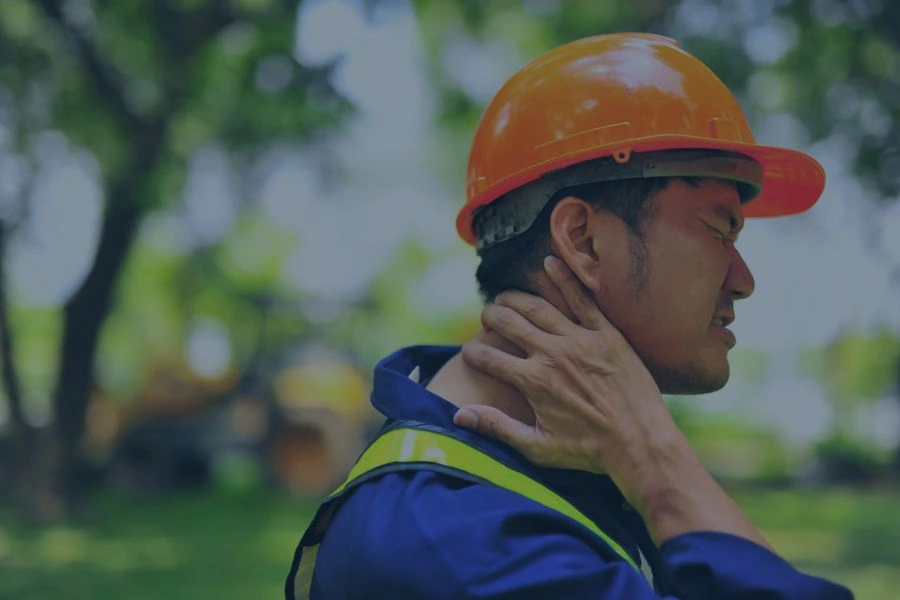
Neck injuries at work can happen from heavy lifting, falls, vehicle accidents, repetitive tasks, awkward posture, falling objects, or sudden trauma. Some involve relatively minor muscle strains, while others damage discs, nerves, vertebrae, or even the spinal cord.
These injuries can make it difficult to turn your head, lift, drive, sit for long periods, operate equipment, or return to physical work. If your neck injury happened because of your job, Shebell & Shebell’s workers’ compensation attorneys in New Jersey can help you understand your options. Below, we cover common injury types, causes, symptoms, workers’ compensation eligibility, benefits, and next steps.
Neck Injuries Can Range From Minor to Life-Changing
A workplace neck injury can affect several different structures, including:
- Muscles and tendons
- Ligaments
- Cervical discs
- Nerve roots
- Cervical vertebrae
- Spinal cord
Some injuries happen suddenly after a fall, collision, or lifting accident. Others develop gradually from repetitive strain, poor posture, repeated lifting, or working in the same position for long periods.
Common Types of Neck Injuries at Work
Neck Strain or Sprain
- Injury type: A strain affects muscles or tendons, while a sprain involves the ligaments that support the neck. Both can cause pain, stiffness, muscle spasms, and limited range of motion.
- Common causes: Heavy lifting, sudden twisting, repetitive work, awkward movements, slips and falls, or overexertion.
- Eligible for workers’ compensation: Yes, potentially. A neck strain or sprain may qualify when it is caused or aggravated by job duties or a workplace accident.
Whiplash
- Injury type: Whiplash happens when the head moves rapidly backward and forward, potentially injuring muscles, ligaments, joints, discs, or nerves in the neck.
- Common causes: Work vehicle crashes, machinery collisions, falls, being struck by an object, or other sudden impacts.
- Eligible for workers’ compensation: Yes, potentially. Whiplash may be covered when the injury occurred while performing work-related duties.
Herniated Cervical Disc
- Injury type: A cervical disc can herniate when material inside the disc pushes through its outer layer and irritates or compresses a nearby nerve. This may cause neck pain, weakness, numbness, or pain that travels into the shoulder or arm.
- Common causes: Heavy lifting, sudden twisting, falls, repetitive strain, forceful movements, or significant trauma.
- Eligible for workers’ compensation: Yes, potentially. Coverage may apply when work caused the herniation or significantly worsened an existing cervical disc problem.
For more on how disc injuries may be handled under workers’ compensation, read our guide to workers’ comp for a herniated disc.
Pinched Nerve or Cervical Radiculopathy
- Injury type: A compressed or irritated nerve in the neck can cause sharp pain, burning, tingling, numbness, or weakness that travels into the shoulder, arm, or hand.
- Common causes: Herniated discs, inflammation, repetitive strain, spinal narrowing, or traumatic neck injuries.
- Eligible for workers’ compensation: Yes, potentially. The key issue is whether workplace activity caused or aggravated the condition affecting the nerve.
Repetitive Strain Neck Injury
- Injury type: Repeated physical stress or prolonged positioning can gradually strain the muscles, joints, and other structures in the neck.
- Common causes: Computer work, assembly-line tasks, prolonged driving, repeated lifting, awkward posture, and sustained neck positioning.
- Eligible for workers’ compensation: Yes, potentially. A neck injury does not always need to come from one sudden accident if repetitive job duties contributed to the condition.
Stinger or Burner
- Injury type: A stinger or burner involves temporary irritation or stretching of a nerve root or the brachial plexus. Symptoms often include burning, tingling, weakness, numbness, or an electrical sensation down one arm.
- Common causes: Sudden impact, forceful stretching of the neck and shoulder, falls, collisions, or other physically demanding work.
- Eligible for workers’ compensation: Yes, potentially. These injuries may qualify when the nerve trauma resulted from a workplace incident.
Cervical Fracture
- Injury type: A cervical fracture is a break in one or more vertebrae in the neck. Severe fractures can make the spine unstable and threaten the spinal cord.
- Common causes: Falls from heights, vehicle accidents, crushing incidents, falling objects, construction accidents, or other major trauma.
- Eligible for workers’ compensation: Yes, potentially. A work-related cervical fracture may support benefits for necessary medical treatment, time away from work, and permanent disability when lasting impairment remains.
Cervical Dislocation
- Injury type: A cervical dislocation occurs when a vertebra moves out of its normal position. This can create spinal instability and, in serious cases, damage nearby nerves or the spinal cord.
- Common causes: High-impact falls, motor vehicle crashes, crushing injuries, or other severe workplace trauma.
- Eligible for workers’ compensation: Yes, potentially. A work-related dislocation may require extensive treatment, surgery, rehabilitation, and a significant period away from work.
Cervical Spinal Cord Injury
- Injury type: Damage to the cervical spinal cord can cause weakness, loss of sensation, impaired movement, breathing problems, paralysis, or permanent disability.
- Common causes: Cervical fractures, dislocations, falls from heights, vehicle crashes, crushing accidents, or other major impacts.
- Eligible for workers’ compensation: Yes, potentially. Severe spinal cord injuries caused by work may involve extensive medical care, rehabilitation, lost-time benefits, and permanent disability issues. According to the 2026 New Jersey Workers’ Compensation Schedule of Disabilities and Maximum Benefits, permanent total disability benefits are listed at 70% of wages, with a $320 minimum and $1,199 maximum, initially for 450 weeks, with additional benefits possible under the statute.
What Causes Neck Injuries at Work?
A neck injury can happen in one sudden accident or develop gradually from repetitive physical stress. The risk depends heavily on the type of work being performed.
Common causes include:
- Heavy or repetitive lifting
- Sudden twisting
- Poor or sustained posture
- Computer and desk work
- Prolonged driving
- Slips and falls
- Falls from heights
- Motor vehicle accidents
- Construction accidents
- Falling objects
- Machinery accidents
- Moving or lifting patients
- Repetitive physical labor
Construction workers, warehouse employees, nurses, healthcare workers, truck and delivery drivers, laborers, machine operators, and employees who spend long periods at a computer may all experience job-related neck problems for different reasons. Workers who injure their necks may also suffer related spinal injuries; learn more in our guide to back injuries at work.
Symptoms of a Work-Related Neck Injury
Neck injuries do not always cause symptoms immediately. Pain and stiffness may appear at once, while other symptoms can develop hours or even days after an accident.
Common symptoms include:
- Neck pain
- Stiffness
- Limited range of motion
- Muscle spasms
- Headaches
- Shoulder pain
- Pain traveling into the arm
- Tingling
- Numbness
- Weakness
- Burning or electrical sensations
Radiating pain, weakness, or numbness can be especially important because they may indicate that a nerve or cervical disc is involved.
When a Neck Injury Becomes a Long-Term Work Problem
Some workers recover from a neck injury and return to their normal duties. Others continue dealing with symptoms that make the same job difficult or impossible.
Long-term problems may include:
- Chronic or recurring neck pain
- Reduced range of motion
- Difficulty driving
- Problems lifting or carrying
- Difficulty sitting at a workstation
- Numbness or weakness in the arms or hands
- Permanent lifting or movement restrictions
- Need for injections or surgery
- Frequent flare-ups
- Inability to return to the same occupation
These limitations can be particularly significant for workers whose jobs require driving, heavy lifting, overhead work, repetitive movements, or operating machinery.
New Jersey Workers’ Compensation for Neck Injuries
A qualifying work-related neck injury may provide access to medical treatment and disability benefits through New Jersey’s workers’ compensation system.
Medical Treatment
Workers’ compensation may cover reasonable and necessary treatment related to the occupational neck injury.
Treatment can include:
- Diagnostic imaging
- Medication
- Physical therapy
- Injections
- Specialist care
- Surgery
The appropriate treatment depends on whether the injury involves muscles, discs, nerves, vertebrae, or the spinal cord.
Temporary Disability Benefits
If a neck injury prevents an employee from working while recovering, temporary disability benefits may be available when the claim meets New Jersey workers’ compensation requirements.
These benefits are intended to replace part of the wages lost while the worker is medically unable to perform the job.
According to the 2026 New Jersey Workers’ Compensation Schedule of Disabilities and Maximum Benefits, temporary disability benefits for a neck injury are generally 70% of wages, subject to a $320 weekly minimum and $1,199 weekly maximum, for up to 400 weeks.
Permanent Disability After a Neck Injury
Some neck injuries leave lasting limitations even after treatment ends.
Herniated discs, nerve damage, fractures, spinal cord injuries, and other serious conditions may affect strength, movement, sensation, or the ability to perform certain job duties. Whether permanent disability benefits are available depends on the medical evidence and the individual circumstances rather than the diagnosis alone.
What About a Pre-Existing Neck Condition?
Having arthritis, disc degeneration, spinal narrowing, or another prior neck problem does not automatically prevent a workers’ compensation claim.
A claim may still be possible when a workplace accident or repeated job duties materially aggravate an existing condition. Medical records can become especially important in showing how the worker’s condition changed after the work-related event or exposure.
What Could a Permanent Neck Injury Be Worth in 2026?
The 2026 New Jersey disability schedule can provide a high-level illustration of permanent partial disability compensation for neck injuries. The chart’s “partial total” column uses a 600-week schedule, and the amount increases with the percentage of permanent disability.
For example, the 2026 schedule shows:
| Permanent Disability | Weeks | Scheduled Benefit |
| 5% | 30 | $9,600 |
| 10% | 60 | $19,200 |
| 15% | 90 | $28,800 |
| 20% | 120 | $41,280 |
| 25% | 150 | $54,720 |
| 30% | 180 | $70,560 |
| 40% | 240 | $153,360 |
| 50% | 300 | $239,700 |
What to Do After Injuring Your Neck at Work
Report the Injury
Tell your employer or supervisor about the injury promptly. Explain when it happened, what you were doing, and which parts of your neck or body were affected.
Get Medical Care
Describe all symptoms to the treating provider, including numbness, tingling, weakness, headaches, limited movement, or pain traveling into the shoulder or arm.
Do not assume a neck injury is minor simply because severe symptoms did not appear immediately.
Keep Records
Save documentation related to the injury, including:
- Medical records
- Work restrictions
- Incident reports
- Witness information
- Imaging results
- Emails or text messages
- Wage records
- Records of missed work
A clear record can help establish how the injury occurred and how it has affected your ability to work.
Frequently Asked Questions About Neck Injuries at Work
What Is the Most Common Neck Injury at Work?
Muscle strains and ligament sprains are common workplace neck injuries, although the type of injury depends on the job and how the accident occurred.
Can Heavy Lifting Cause a Neck Injury?
Yes. Heavy or awkward lifting can strain the neck and may also contribute to cervical disc or nerve injuries.
Can Whiplash Be Covered by Workers’ Compensation?
Potentially. Whiplash may qualify when it results from a work-related vehicle crash, fall, collision, or other workplace accident.
Can I Get Workers’ Comp for a Herniated Disc in My Neck?
Potentially. A cervical herniated disc may be covered when employment caused the injury or significantly aggravated an existing disc condition.
Are Repetitive Strain Neck Injuries Covered?
They can be. Some neck conditions develop gradually from repeated lifting, prolonged positioning, or other recurring job duties rather than one specific accident.
Can Workers’ Comp Cover a Pre-Existing Neck Condition?
Potentially. A prior neck condition does not automatically prevent a claim when work significantly worsens or aggravates the condition.
What if I Cannot Return to My Job After a Neck Injury?
You may have additional workers’ compensation issues involving continued medical care, work restrictions, temporary disability, or permanent disability depending on the severity of the injury.
Speak With Shebell & Shebell About a Work-Related Neck Injury
Workplace neck injuries can range from strains and whiplash to herniated discs, fractures, nerve damage, and serious spinal cord injuries. Even when an injury is not immediately life-threatening, ongoing pain or restricted movement can make normal job duties difficult.
If a neck injury is keeping you from working or has left you with lasting limitations, Shebell & Shebell’s workers’ compensation attorneys in New Jersey can help you understand your claim and the benefits that may be available.