
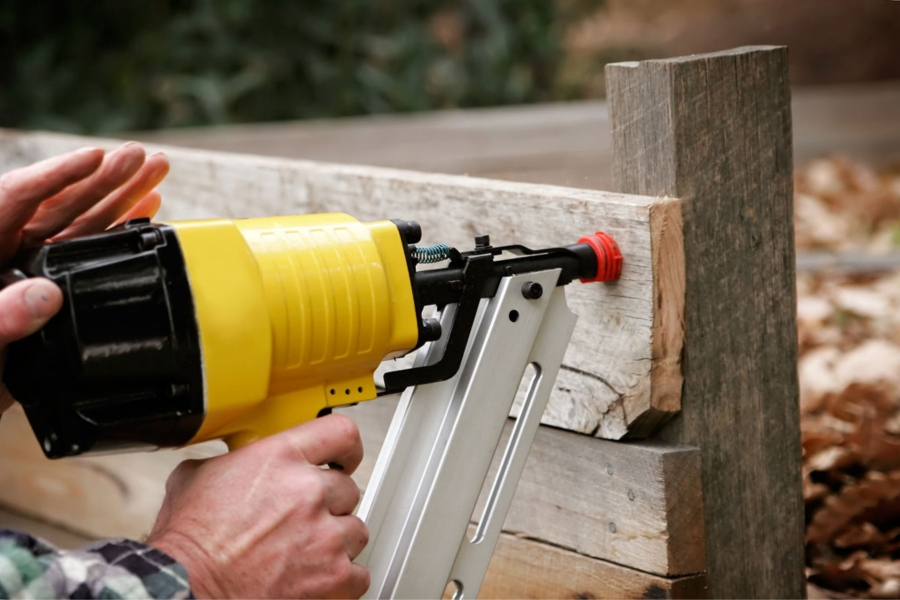
Nail guns are common on construction sites and in roofing, carpentry, framing, maintenance, and repair work throughout New Jersey. They help workers move faster, but they also fire with enough force to cause serious injuries in a split second.
A nail gun accident can cause deep puncture wounds, broken bones, nerve damage, eye injuries, traumatic brain injuries, internal organ damage, and, in the most serious cases, death. Even an injury that looks small from the outside may involve significant damage beneath the skin.
When a nail gun injury happens at work, workers’ compensation may help cover medical treatment, lost wages, and disability benefits. A separate third-party claim may also be possible if defective equipment, poor maintenance, unsafe supervision, or another company contributed to the accident.
If you were injured by a nail gun at work, speak with our construction accident attorneys in New Jersey about your workers’ compensation and potential third-party claim options.
Injured in a Nail Gun Accident in New Jersey?
A nail gun accident can injure the person operating the tool, a nearby coworker, a subcontractor, or anyone else passing through the work area.
These accidents may happen on:
- Construction sites
- Roofing projects
- Carpentry and framing jobs
- Remodeling projects
- Warehouses and manufacturing facilities
- Maintenance and repair sites
- Residential and commercial properties
A worker may accidentally fire a nail into their own hand, foot, or leg. In other cases, a nail may pass through lumber, ricochet off a hard surface, or discharge unexpectedly and strike someone nearby.
These injuries should never be dismissed as minor. A small puncture wound may involve infection, nerve damage, tendon damage, a broken bone, or a foreign object lodged beneath the skin. Prompt medical treatment can help identify injuries that are not immediately visible.
How Nail Gun Accidents Happen
Many nail gun accidents are preventable. They often happen because of unsafe equipment, inadequate training, poor maintenance, careless use, weak supervision, or dangerous jobsite conditions.
Understanding how the accident happened can also be important when determining whether the worker has a workers’ compensation claim, a third-party claim, or both.
Accidental or Unintentional Discharge
An accidental discharge happens when a nail gun fires even though the operator did not intend to fire it.
This can happen when the operator holds the trigger down and the contact tip bumps against a surface, tool, piece of material, or another person. A worker may also accidentally press the trigger while carrying, repositioning, or clearing the tool.
Unexpected discharges can injure the operator, a coworker standing nearby, or someone working on the opposite side of the material.
Double Fires and Rapid Firing
Some nail guns may fire a second nail unexpectedly. This can happen because of recoil, trigger design, improper technique, excessive pressure, or a problem with the tool.
The first discharge may cause the nail gun to bounce away from the surface and then make contact again before the operator regains control. A second nail may fire before the worker realizes what is happening.
Double fires can cause injuries to the operator’s hands, arms, legs, or body, as well as injuries to nearby workers.
Nail Ricochets
Nails do not always travel in a straight line. They may strike metal, concrete, hidden fasteners, knots in wood, or other dense materials and ricochet toward the operator or another worker.
A ricochet can cause eye injuries, facial wounds, puncture injuries, and other serious damage. The risk may be greater when workers use the wrong fastener, excessive pressure, or a nail gun that is not appropriate for the material.
Nail Blow-Through
A nail blow-through happens when a nail passes completely through lumber, drywall, thin materials, or another work surface.
Someone standing or working on the opposite side may be struck without warning. This is especially dangerous when workers cannot clearly see who is behind the material or when multiple trades are working in the same area.
Defective or Malfunctioning Nail Guns
A nail gun may become dangerous when a component fails, the tool is poorly maintained, or built-in safety features do not work properly.
Problems may include:
- Faulty or sticking triggers
- Failed contact safety mechanisms
- Excessive or inconsistent air pressure
- Defective batteries or fuel systems
- Worn internal components
- Improper repairs
- Missing guards or safety devices
- Unauthorized modifications to the tool
A malfunction may cause the nail gun to fire unexpectedly, fire more than once, jam, lose power, or behave differently from how the operator expects.
When defective or poorly maintained equipment contributes to an accident, the tool itself may become important evidence.
Poor Training and Unsafe Supervision
Workers should receive training on the specific nail gun they are expected to use. Nail guns do not all operate the same way, and a worker who understands one model may not understand the trigger or safety system on another.
Training should address:
- How the trigger operates
- Proper loading and unloading
- Safe air compressor settings
- How to clear jams
- How to recognize ricochet risks
- Safe hand and body positioning
- Using the tool from ladders or elevated surfaces
- Keeping coworkers out of the firing path
Supervisors should also make sure damaged tools are removed from service and unsafe practices are corrected. Rushing workers, ignoring safety complaints, or allowing untrained employees to operate nail guns can increase the risk of serious injuries.
Working in Awkward Positions
Nail guns are often used overhead, below knee level, in tight spaces, from ladders, or while standing on scaffolds and elevated platforms.
These positions can make it harder to keep the tool steady and control recoil. A worker may also have limited visibility of the material, the firing path, or nearby coworkers.
If the nail gun kicks, jams, or discharges unexpectedly, the worker may lose balance and fall. This can turn a nail gun incident into a much more serious construction accident.
Types of Nail Guns Used on New Jersey Jobsites
Different jobs require different types of nail guns. Each tool has its own power source, firing mechanism, maintenance needs, and safety risks.
Pneumatic Nail Guns
Pneumatic nail guns use compressed air supplied through a hose and air compressor. They are commonly used for framing, roofing, siding, finishing, and other construction work.
Risks may involve excessive air pressure, damaged hoses, loose connections, trigger malfunctions, jams, and accidental firing. A sudden hose movement or pressure issue may also cause the worker to lose control of the tool.
Battery-Powered and Electric Nail Guns
Battery-powered and electric nail guns are often used for framing, trim work, finishing, roofing, and maintenance projects. These tools may be easier to move around because they do not require an air hose.
However, they can still malfunction. Defective batteries, faulty triggers, worn mechanical parts, poor maintenance, and failed safety mechanisms may cause unexpected firing or loss of control.
Gas or Fuel-Powered Nail Guns
Gas and fuel-powered nail guns use a fuel cell and ignition system to create the force needed to drive a nail.
These tools may create added risks involving fuel leaks, ignition problems, poor ventilation, improper storage, inadequate maintenance, or defective components. Workers should be trained on safe fuel handling and the specific operation of the tool.
Powder-Actuated Tools
Powder-actuated fastening tools use an explosive charge to drive fasteners into concrete, steel, masonry, or other hard surfaces.
Because of the force involved, these tools require special handling and training. They should only be operated by workers who understand the firing mechanism, proper loads, appropriate fasteners, surface conditions, and safety procedures.
Improper use can cause fasteners to ricochet, break apart, pass through materials, or strike workers with significant force.
Common Nail Gun Injuries
The severity of a nail gun injury depends on where the nail enters, how deeply it travels, and whether it strikes a nerve, tendon, bone, blood vessel, or organ.
The risk of infection and other complications can also increase when dirt, wood fragments, metal, or other debris enters the wound.
Hand, Finger, and Wrist Injuries
Hands, fingers, and wrists are often close to the firing area when workers hold or position materials.
Nail gun accidents can cause puncture wounds, fractures, tendon damage, nerve injuries, joint damage, and loss of movement. A worker may also experience weakness, numbness, stiffness, or reduced grip strength.
These injuries can make it difficult to use tools, lift materials, grip objects, or return to carpentry, roofing, framing, and other hands-on work.
Foot, Ankle, and Leg Injuries
A worker may accidentally fire a nail into their foot, ankle, or lower leg while positioning the tool or working near the ground.
Lower-body injuries may also happen when a tool is dropped, mishandled, or fired through a piece of material. A nail may penetrate a work boot, strike a bone, or damage nerves, tendons, and blood vessels.
Even after the nail is removed, the worker may have difficulty standing, walking, climbing, or returning to physically demanding work.
Eye and Facial Injuries
Ricocheting nails, broken fasteners, wood fragments, and flying debris can cause serious eye and facial injuries.
These accidents may lead to vision damage, permanent vision loss, facial fractures, scarring, dental injuries, and damage to surrounding nerves and tissues.
Workers near nail gun operations may be at risk even when they are not operating the tool.
Head and Brain Injuries
A nail that strikes or penetrates the head can cause a skull fracture, traumatic brain injury, bleeding, infection, and permanent neurological damage.
These injuries may affect memory, speech, movement, concentration, behavior, and the ability to work independently. Emergency treatment is critical whenever a nail strikes the head or face.
Chest and Abdominal Injuries
Nails entering the chest or abdomen may damage the lungs, heart, blood vessels, intestines, liver, or other internal organs.
The visible wound may not show the full path of the nail or the extent of internal damage. These injuries can cause internal bleeding and other life-threatening complications that require immediate medical care.
Nerve Damage and Permanent Disability
Nails can cut, compress, or permanently damage nerves. This may lead to chronic pain, numbness, tingling, weakness, reduced movement, or loss of function.
A serious nail gun injury may prevent a worker from returning to the same trade, especially when the job requires strength, grip, balance, climbing, or precise hand movements.
Permanent limitations may also affect future earnings and the worker’s ability to perform everyday tasks.
Infection and Complications
Puncture wounds can carry dirt, bacteria, wood fragments, metal, clothing fibers, and other materials deep beneath the skin.
Without proper treatment, the wound may become infected or damage may go unnoticed. Complications may include deep tissue infection, bone infection, nerve problems, reduced mobility, and the need for additional surgery.
Workers should get medical attention promptly even when the puncture looks small or the pain initially seems manageable.
What to Do After a Nail Gun Accident
The steps taken after a nail gun accident can affect both the worker’s recovery and the strength of a future claim.
Get Medical Treatment Immediately
Seek medical treatment right away. Do not attempt to remove a deeply embedded nail yourself or assume the wound is minor because there is little bleeding.
Removing the nail without proper imaging can cause additional damage if it is touching a nerve, blood vessel, bone, or organ.
Treatment may involve:
- X-rays or other imaging
- Wound cleaning
- Surgery
- Antibiotics
- Tetanus treatment
- Nerve or tendon evaluation
- Physical or occupational therapy
- Follow-up care and rehabilitation
Medical records also help document where the nail entered, the damage it caused, and how the injury affects your ability to work.
Report the Accident
Notify your supervisor, foreman, contractor, employer, or other proper representative as soon as possible.
Explain when and where the accident happened, who was present, what tool was involved, and what parts of your body were injured. Do not assume the accident has been formally reported just because a coworker or supervisor witnessed it.
Verbal notice can begin the process, but written documentation creates a clearer record of when the accident was reported and what information was provided.
Document the Tool and Scene
Nail gun cases may depend heavily on the condition of the tool and the details of the jobsite. Document as much as possible before equipment is moved, repaired, or discarded.
Helpful information may include:
- Photos of the nail gun
- The make, model, and serial number
- The trigger type
- The air compressor, battery, fuel cell, or power source
- The material being fastened
- The worker’s position at the time
- Available safety equipment
- Witness names and contact information
- Photos of the accident area
- Training records
- Maintenance and repair issues
- Prior complaints about the tool
The worker should also keep copies of incident reports, medical records, work restrictions, messages, and any communications involving the accident.
Preserve the Nail Gun
The nail gun may become important evidence if a malfunction, defective design, improper repair, or failed safety feature contributed to the accident.
Do not allow the tool to be discarded, altered, repaired, cleaned, or returned to a rental company before it can be properly evaluated. Changes to the tool may make it harder to determine whether the trigger, safety mechanism, pressure system, battery, fuel system, or another component failed.
The make, model, serial number, trigger type, and condition of the tool should be documented as soon as possible. An attorney may also seek maintenance records, inspection records, repair history, and prior complaints involving the same equipment.
Keep Medical and Employment Records
Keep copies of every document connected to the accident and your recovery.
Important records may include:
- Emergency room and doctor records
- Imaging and test results
- Surgery and rehabilitation records
- Prescriptions
- Work restriction notes
- Incident reports
- Pay stubs and wage information
- Records of missed work
- Emails, texts, and other communications with supervisors
- Letters or forms from the insurance carrier
These records can help show how the accident happened, what treatment you needed, how long you were unable to work, and whether the injury created lasting limitations.
Contact an Attorney
Legal guidance may be especially important when the injury is severe, the nail gun malfunctioned, another contractor was involved, or the employer is blaming the worker.
An attorney can help preserve the tool, identify the companies involved, review jobsite records, gather witness statements, and protect deadlines. Legal help can also be important when medical treatment is delayed, wage benefits are disputed, or the worker may have both a workers’ compensation claim and a separate claim against an outside party.
Workers’ Compensation After a Nail Gun Injury
Workers’ compensation may provide benefits when a nail gun accident happens during employment, even if no one can immediately determine exactly who caused it.
The system generally focuses on whether the injury arose out of the worker’s job. That means an employee may have a claim after being injured by their own nail gun, a coworker’s tool, or equipment used on the jobsite.
The available benefits depend on the injury, medical evidence, employment status, and how the condition affects the worker’s ability to perform their job. Learn more about workers compensation in New Jersey here.
Medical Benefits
Workers’ compensation may cover authorized medical treatment related to the nail gun injury.
This can include emergency care, diagnostic imaging, surgery, medication, antibiotics, tetanus treatment, physical therapy, occupational therapy, specialist care, and follow-up appointments.
Medical benefits may also include treatment for complications such as infection, nerve damage, reduced movement, or chronic pain.
Temporary Disability Benefits
Temporary disability benefits may be available when a worker cannot return to construction, roofing, carpentry, framing, maintenance, or other physical work while recovering.
These benefits replace part of the worker’s lost income during the period they are medically unable to perform their job.
A nail gun injury to the hand, foot, eye, head, or another body part may make it unsafe to climb, lift, use tools, maintain balance, or perform detailed work.
Permanent Disability Benefits
Permanent disability benefits may apply when the worker has lasting limitations after reaching maximum medical improvement.
Permanent conditions may include nerve damage, reduced movement, chronic pain, weakness, loss of grip strength, impaired vision, amputation, scarring, or other limitations that affect work and daily life.
The amount and type of benefits depend on the body part involved, the degree of impairment, and the medical evidence.
Death Benefits
When a nail gun accident causes a fatal workplace injury, certain surviving family members may have rights to workers’ compensation death benefits.
These benefits may help address financial losses following the death of a worker. Eligibility depends on the family relationship, dependency, and facts of the claim.
Nail Gun Accidents and Third-Party Claims
Workers’ compensation may not be the only available claim after a nail gun accident.
A separate third-party claim may exist when a person or company outside the injured worker’s employer caused or contributed to the accident.
Potential third parties may include:
- A manufacturer that produced a defective nail gun
- A distributor that supplied unsafe equipment
- A rental company that failed to maintain the tool
- A general contractor that created unsafe conditions
- A subcontractor whose worker caused the discharge
- A property owner that failed to address a known hazard
- A maintenance company that performed unsafe repairs
A third-party claim may allow an injured worker to pursue losses that are not fully available through workers’ compensation, depending on the facts. This may include damages related to pain and suffering and other losses caused by the accident.
Who May Be Responsible for a Nail Gun Accident?
Several parties may need to be investigated after a nail gun injury. Responsibility depends on who controlled the tool, the jobsite, the work being performed, and the safety procedures in place.
The Employer
An employer may have failed to provide proper training, supervision, maintenance, protective equipment, or safe work procedures.
Employers should make sure workers understand the nail gun they are using, damaged tools are removed from service, and safety rules are enforced.
Workers’ compensation generally limits direct lawsuits against an employer, but the employer’s records and safety practices may still be important to the workers’ compensation claim and any third-party investigation.
General Contractors and Subcontractors
A general contractor or subcontractor may be responsible when its employees, equipment, or unsafe practices cause the accident.
Examples may include a subcontractor supplying a defective tool, a worker firing into an occupied area, or a contractor pressuring employees to ignore safety rules to work faster.
The relationship between the companies on the jobsite should be reviewed carefully.
Nail Gun Manufacturers
A manufacturer may be responsible if the nail gun contained a defective trigger, failed safety mechanism, missing guard, inadequate warning, or another design or manufacturing problem.
Product liability claims often require the tool to be preserved and evaluated before it is repaired or altered.
Records involving recalls, similar incidents, design changes, and prior complaints may also be relevant.
Equipment Rental and Maintenance Companies
Rental and maintenance companies may need to be investigated if the nail gun was supplied in unsafe condition or improperly repaired.
Potential issues include missed inspections, worn components, failed safety devices, improper replacement parts, or returning a damaged tool to service.
Property Owners
A property owner may have responsibility in limited situations when they controlled the worksite or contributed to an unsafe condition.
This might involve known property hazards, unsafe work areas, poor coordination between contractors, or conditions that affected how the tool was used.
Nail Gun Safety Failures on Construction Sites
Many nail gun accidents involve basic safety failures rather than unavoidable events.
Common problems include:
- Inadequate training
- Improper trigger selection
- Disabled safety mechanisms
- Poor tool maintenance
- Excessive air pressure
- Unsafe hand or body positioning
- Failure to provide or use eye protection
- Workers placed in the firing path
- Unsafe use on ladders or scaffolds
- Failure to remove damaged tools from service
- Pressure to work too quickly
These failures may help explain how the accident happened and who had control over the unsafe condition.
The purpose of reviewing safety failures is not to blame the injured worker. It is to understand whether training, equipment, supervision, or jobsite practices contributed to the injury.
What If the Employer Blames the Worker?
Employers and insurance companies may argue that the worker used the nail gun incorrectly, ignored instructions, or caused the accident.
That argument does not automatically defeat a workers’ compensation claim. Workers’ compensation generally focuses on whether the injury arose out of employment, not simply on who made a mistake.
A third-party case may require a closer investigation into fault. Important evidence may include:
- Training records
- The condition of the tool
- The trigger system
- Witness statements
- Jobsite safety rules
- Maintenance history
- Prior complaints
- Supervisor instructions
- Photos or video of the work area
A complete investigation may show that the worker was not properly trained, the nail gun malfunctioned, safety features were disabled, or unsafe jobsite pressure contributed to the accident.
What If the Nail Gun Accident Claim Is Denied?
A denied nail gun accident claim does not necessarily mean the case is over.
A claim may be denied because:
- The employer says the accident was not reported
- The insurer argues the worker was not on the job
- The company disputes the severity of the injury
- Medical treatment is delayed or questioned
- The employer claims the worker misused the tool
- The insurer disputes whether the condition was caused by the accident
- Employment status is questioned
- Another contractor controls important evidence
Additional medical records, witness statements, incident reports, employment documents, and evidence involving the nail gun may help challenge the denial.
Depending on the facts, the worker may have hearing or appeal options through the New Jersey workers’ compensation system.
How Shebell & Shebell Helps Nail Gun Accident Victims
Shebell & Shebell helps injured workers understand their rights after serious nail gun accidents.
The firm can investigate how the nail gun fired, identify the tool and trigger system, and take steps to preserve the equipment as evidence.
The legal team may also review:
- Maintenance and inspection records
- Training and supervision
- Witness statements
- Jobsite safety procedures
- Medical documentation
- Work restrictions and missed wages
- Outside contractors and equipment companies
- Potential defective product claims
- Potential third-party claims
Shebell & Shebell can also address delayed or denied workers’ compensation benefits and help protect access to medical treatment and wage benefits during recovery.
Frequently Asked Questions About Nail Gun Accidents
Can I receive workers’ compensation for a nail gun injury?
Potentially, yes. If the injury happened while you were performing job duties, workers’ compensation may cover medical treatment, lost wages, and disability benefits.
What if a coworker fired the nail gun?
You may still have a workers’ compensation claim. Depending on who employed the coworker and how the accident happened, there may also be a third-party claim.
Can I sue the nail gun manufacturer?
Possibly. A product liability claim may exist if a defective trigger, safety mechanism, component, warning, or design contributed to the injury.
What if the nail gun was rented?
The rental company may need to be investigated if the tool was poorly maintained, improperly repaired, or supplied in an unsafe condition.
Should I report a small nail gun puncture wound?
Yes. Even a small puncture may involve infection, nerve damage, bone injury, or a retained foreign object beneath the skin.
What if my employer says I caused the accident?
Do not assume that ends your claim. The accident should be investigated, including the condition of the tool, training, supervision, maintenance, and how the discharge occurred.
Can I file both a workers’ compensation claim and a third-party claim?
Possibly. Workers’ compensation may apply to the job-related injury, while a separate claim may exist against a manufacturer, contractor, property owner, rental company, or another outside party.
Talk to a Nail Gun Accident Attorney in New Jersey
A nail gun accident can cause severe injuries even when the visible wound initially appears small. A puncture may involve damaged nerves, broken bones, infection, vision loss, internal injuries, or permanent limitations that prevent the worker from returning to the same job.
These cases may involve workers’ compensation, defective equipment, unsafe supervision, negligent contractors, rental companies, manufacturers, or other third parties.
Contact Shebell & Shebell today to speak with a construction accident attorney in New Jersey about your workers’ compensation benefits and potential third-party claim.