

Bicycle Laws in New Jersey: A Complete Guide

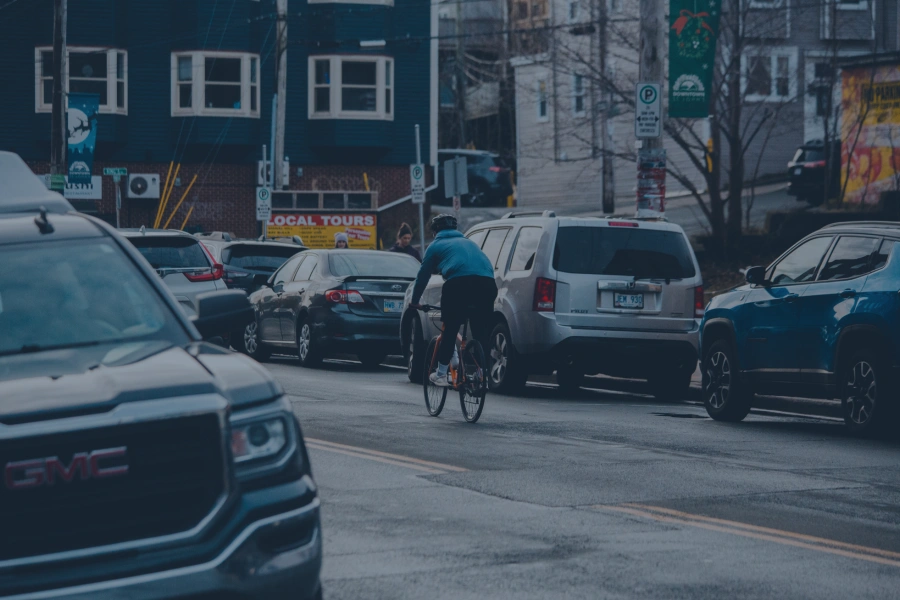
New Jersey cyclists have both legal rights and legal responsibilities when they use public roads. According to the New Jersey Bicycle and Pedestrian Resource Center, the state has experienced high rates of bicyclist injuries and fatalities compared with national averages, underscoring the need for safer driving behavior, better road design, and stronger protection for vulnerable road users.
New Jersey law addresses where bicyclists may ride, required equipment, helmets, lights, passengers, roadway positioning, and how motorists must behave when passing cyclists. Local municipalities can also adopt additional rules, particularly for sidewalk riding. If you were injured because a driver failed to safely share the road, Shebell & Shebell’s New Jersey bicycle accident attorneys can help you understand your legal options.
This guide covers the major bicycle laws cyclists and drivers should know, along with practical safety equipment, helmet resources, and newer technology designed to help riders stay aware of approaching traffic.
What Does New Jersey Law Consider a Bicycle?
According to the New Jersey Department of Transportation’s bicycle regulations, bicycling in New Jersey is governed under Title 39 of the state’s Motor Vehicles and Traffic Regulation laws.
Under N.J.S.A. 39:4-14.5, New Jersey defines a bicycle as a two-wheeled vehicle with a rear drive wheel that is powered solely by the rider and has a seat height of at least 26 inches when adjusted to its lowest position. Bicycle rules are primarily found within Title 39 of New Jersey’s motor vehicle and traffic laws.
This guide focuses on traditional human-powered bicycles. E-bikes are subject to additional classifications and regulations. For a look at recent incidents involving electric bicycles across the state, see our New Jersey e-bike accidents list.
New Jersey Laws for Bicyclists
Bicyclists Have the Rights and Duties of Motorists
Under N.J.S.A. 39:4-14.1, a person riding a bicycle on a roadway has the same basic rights and is subject to the same duties as a motor vehicle driver.
That means bicyclists must obey applicable:
- Traffic lights
- Stop signs
- Right-of-way rules
- Lane markings
- Other traffic-control laws
Bicycles are lawful road users. At the same time, cyclists are expected to follow the rules of the road rather than treat traffic laws as optional.
Where Bicyclists Should Ride on the Road
New Jersey generally requires bicyclists to ride as near to the right side of the roadway as practicable while exercising due care.
That does not mean a cyclist must stay against the curb under every circumstance.
Under N.J.S.A. 39:4-14.2, a cyclist may move left when necessary to:
- Make a left turn
- Avoid debris, drains, or other hazardous conditions
- Pass a slower-moving vehicle
- Use an available lane when traveling at the same speed as traffic
These exceptions matter. A rider is not required to remain in a dangerous portion of the road simply because it is farther to the right.
Riding With Traffic and Riding Two Abreast
Bicyclists must ride in the same direction as motor vehicle traffic.
New Jersey also allows cyclists to ride no more than two abreast when doing so does not impede traffic. When riding two abreast would interfere with traffic, cyclists should ride single file.
Bicycle Lights Required at Night
New Jersey law requires specific lighting when a bicycle is used at night.
Under N.J.S.A. 39:4-10, a bicycle must have:
- A white front headlamp visible from at least 600 feet
- A red rear lamp visible from at least 600 feet
- A red rear reflector may also be installed in addition to the rear lamp
These rules are designed to make cyclists visible from both directions when roadway visibility is reduced.
Bicycles Must Have Working Brakes
Under N.J.S.A. 39:4-11.1, a bicycle must have a functioning brake capable of making the wheels skid while stopping on dry, level, clean pavement.
A bicycle that cannot stop effectively is not only unsafe but may also fail to meet New Jersey’s equipment requirements.
Bicycles Must Have a Bell or Audible Device
New Jersey requires bicycles to have a bell or another audible warning device that can be heard from at least 100 feet away.
A siren or whistle does not satisfy the requirement.
New Jersey Bicycle Helmet Law
Under N.J.S.A. 39:4-10.1, anyone under 17 years old who rides a bicycle, rides as a passenger, or is towed as a bicycle passenger must wear a properly fitted and fastened helmet.
New Jersey also requires qualifying bicycle helmets to meet applicable federal safety standards.
Adults are not generally required by statewide law to wear a bicycle helmet, but wearing one remains an important safety measure regardless of age.
Rules About Passengers and Bicycle Control
New Jersey also regulates how a bicycle may be operated.
Under N.J.S.A. 39:4-12:
- A bicycle should not carry more passengers than it is designed and equipped to carry.
- A rider should not operate with both hands removed from the handlebars.
- Cyclists should not perform trick or “fancy” riding in the street.
These rules are intended to keep riders in control while sharing the road with other traffic.
Cyclists Cannot Hitch Onto Motor Vehicles
A cyclist cannot attach themselves to a streetcar or other motor vehicle while riding.
N.J.S.A. 39:4-14 expressly prohibits this practice.
Can You Ride a Bicycle on the Sidewalk in New Jersey?
New Jersey does not have one blanket statewide law prohibiting ordinary bicycle riding on every sidewalk.
However, municipalities can adopt their own ordinances restricting bicycle use on sidewalks or in certain areas. Riders should check local rules and posted signs in the city or town where they are riding.
That distinction is important: state bicycle law establishes the general framework, but local ordinances can create additional restrictions.
New Jersey Laws for Drivers Around Bicyclists
Drivers have their own legal responsibilities when they encounter cyclists. One of the most important is New Jersey’s Safe Passing Law.
New Jersey’s Safe Passing Law
N.J.S.A. 39:4-92.4 requires motorists approaching bicyclists and other vulnerable road users to use due caution.
The law creates a clear order for how drivers should pass.
- Change lanes when possible and safe.
If traffic and roadway conditions allow it, the driver should move into a lane that is not adjacent to the cyclist. - Leave at least four feet if a lane change is not possible.
The driver must maintain a safe passing distance of at least four feet until the bicycle has been completely passed. - Slow down when four feet cannot safely be provided.
If neither a lane change nor four feet of clearance is possible, the driver must slow to 25 mph or below the posted speed limit, be prepared to stop, and pass only when doing so will not endanger the cyclist or anyone else on the road.
The law protects bicyclists as vulnerable road users rather than expecting riders to move off the roadway whenever a vehicle approaches.
Penalties for Violating the Safe Passing Law
New Jersey’s Safe Passing Law carries penalties when a driver fails to follow its requirements.
If no bodily injury results, the driver can be fined $100. If the violation causes bodily injury, the penalty increases to a $500 fine and two motor vehicle points.
Drivers Must Treat Bicycles as Lawful Road Traffic
Bicyclists are lawful roadway users in New Jersey. Under N.J.S.A. 39:4-14.1, cyclists riding on the roadway generally have the rights and responsibilities of motor vehicle drivers.
For motorists, that means expecting and watching for bicycles in ordinary traffic situations, including:
- Intersections
- Left and right turns
- Lane changes
- Driveways
- Merging traffic
- Passing situations
Drivers should not assume a bicyclist must leave the roadway simply because a motor vehicle approaches from behind.
New Jersey’s Driver Manual specifically reminds motorists to watch for bicyclists when turning and to yield to cyclists moving through an intersection before completing a right turn.
Speeding, Distracted Driving, and Other Traffic Violations Still Apply
The Safe Passing Law is only one part of a driver’s responsibility around cyclists. General traffic laws still apply.
Speeding, distracted driving, impaired driving, running traffic signals, unsafe lane changes, and failing to yield can all create serious danger for someone on a bicycle.
The consequences are often more severe for cyclists because there is no vehicle body, seat belt, or airbag between the rider and the road or another vehicle.
What About “Dooring” Accidents?
A “dooring” crash happens when someone in a parked vehicle opens a door into the path of an approaching cyclist. The cyclist may strike the door directly or crash while trying to avoid it.
New Jersey safety guidance tells motorists to check for cyclists before opening a vehicle door. However, New Jersey does not currently have a bicycle-specific dooring statute like many other states. New Jersey’s Target Zero planning materials continued to identify enactment of a dooring law as a proposed legislative action in 2025.
That does not mean someone can carelessly open a vehicle door into a cyclist without potential legal consequences. After a dooring crash, the facts surrounding how the door was opened, where the cyclist was riding, visibility, witness accounts, and other evidence may still be relevant when determining negligence and liability.
Bicycle Safety Gear Beyond New Jersey’s Minimum Legal Requirements
Following New Jersey’s equipment laws is the starting point, not necessarily the end of bicycle safety.
A legally equipped bicycle can still benefit from additional gear that improves head protection, visibility, and awareness of surrounding traffic.
Choosing a Bicycle Helmet
New Jersey requires helmets for riders under 17, but wearing a helmet is a smart safety measure for cyclists of any age.
It is also worth looking beyond whether a helmet simply meets the minimum required certification. Helmets that pass the same baseline standards can perform differently when tested under more varied impact conditions.
The Virginia Tech Helmet Lab independently evaluates bicycle helmets using its STAR testing system. Its bicycle testing measures both linear acceleration and rotational velocity during impacts designed to represent real-world cycling crashes. Virginia Tech recommends choosing a helmet that earns four or five stars.
Virginia Tech Bicycle Helmet Ratings
A higher-rated helmet cannot prevent every head injury, but independent testing gives cyclists another useful tool when comparing helmets instead of choosing based on appearance, price, or marketing alone.
Lights, Reflective Gear, and Visibility
New Jersey law already requires a white front light and red rear light when riding at night. Cyclists can go beyond those minimum requirements by making themselves easier for drivers to see in more conditions.
Additional safety measures may include:
- Reflective clothing or reflective bicycle materials
- High-visibility outerwear
- Daytime running lights
- Additional reflectors
- Keeping lights clean and unobstructed
It is important to separate the two concepts: required bicycle lighting is a matter of New Jersey law; additional visibility gear is a safety choice.
Mirrors and Rear-Awareness Technology
Cyclists also have more options for monitoring traffic approaching from behind.
Traditional bicycle mirrors can provide a continuous rear view without requiring the cyclist to turn around. Electronic rear-facing sensors and radar systems take that idea further by detecting approaching vehicles and sending alerts to the rider.
These devices do not replace physically checking traffic before changing position or turning, but they can provide another source of information about what is happening behind the bicycle.
How Bicycle Radar Technology Can Help Riders Stay Aware
Rear-facing bicycle radar is a relatively newer safety tool designed to alert cyclists when vehicles approach from behind.
Wahoo TRACKR RADAR
The Wahoo TRACKR RADAR combines a rear bicycle light with vehicle-detection radar.
According to Wahoo, the device can detect approaching vehicles from up to 150 meters, or approximately 492 feet, behind the cyclist and send real-time alerts to compatible cycling computers and fitness watches.
It also includes features such as:
- Adaptive rear lighting
- Increased light output when the rider decelerates
- An alert pattern when a vehicle enters the radar detection area
- Real-time approaching-vehicle notifications
Technology like rear-facing radar can improve a cyclist’s situational awareness, but it does not replace checking traffic, following bicycle laws, or using ordinary safe-riding practices.
What Happens When a Driver Violates a Bicycle Safety Law?
When a driver violates a traffic law and a cyclist is injured, that violation may become important evidence in a bicycle accident claim.
Examples can include:
- Passing too closely
- Speeding
- Distracted driving
- Failing to yield
- Running a traffic signal
- Making an unsafe lane change
A traffic violation does not automatically answer every question about who was legally responsible for a crash. The complete circumstances still matter.
Evidence may include the police report, witness statements, photographs, surveillance or dash-camera footage, damage to the bicycle and vehicle, roadway markings, traffic signals, and the location of debris or other hazards.
Road conditions can also become relevant in some crashes. Our discussion of Estate of Massi v. Township of Monroe looks more closely at a case involving a cyclist and allegedly dangerous roadway conditions.
When a bicycle crash causes serious injuries, the legal issues can extend beyond the traffic violation itself. Shebell & Shebell’s personal injury attorneys in New Jersey can help evaluate liability, available insurance coverage, medical damages, lost income, and other losses connected to the accident.
Frequently Asked Questions About New Jersey Bicycle Laws
Do Bicycles Have the Same Rights as Cars in New Jersey?
Bicyclists riding on New Jersey roadways are generally granted the rights and subject to the duties of motor vehicle drivers under N.J.S.A. 39:4-14.1. That means cyclists may lawfully use the roadway but must also obey applicable traffic laws.
Do Cyclists Have to Ride on the Right Side of the Road?
Generally, cyclists must ride as near to the right side of the roadway as practicable. However, New Jersey law allows them to move left to make a left turn, avoid hazards, pass slower traffic, or occupy an available lane when traveling at the speed of traffic.
Can Bicyclists Ride Two Abreast in New Jersey?
Yes. Up to two cyclists may ride abreast when doing so does not impede traffic. Otherwise, riders should travel single file.
Is a Bicycle Helmet Required in New Jersey?
New Jersey requires bicycle helmets for riders under 17 years old, including qualifying passengers and riders being towed. Adults are not generally required by the statewide bicycle helmet law to wear one.
Can You Ride a Bicycle on the Sidewalk in New Jersey?
There is no blanket statewide prohibition covering ordinary bicycle riding on every sidewalk. However, cities and municipalities may establish local restrictions, so cyclists should check local ordinances and posted signs where they ride.
How Much Space Must a Driver Give a Cyclist in New Jersey?
When a safe lane change is not possible, New Jersey’s Safe Passing Law generally requires drivers to provide at least four feet between their vehicle and the cyclist while passing. If four feet cannot safely be provided, the motorist must slow to 25 mph or a lower posted speed, be prepared to stop, and pass only when it is safe.
Are Bicycle Lights Required at Night in New Jersey?
Yes. New Jersey requires bicycles used at night to have a white front headlamp and red rear lamp that are each visible from at least 600 feet. A red rear reflector may also be installed in addition to the rear lamp.
Know Your Rights When Sharing New Jersey Roads
New Jersey bicycle law places responsibilities on everyone sharing the road. Cyclists must follow traffic laws and maintain required equipment, while motorists must recognize bicycles as lawful road users and follow rules such as the state’s four-foot Safe Passing Law. Helmets, lighting, visibility gear, and newer technologies such as bicycle radar can add protection, but they cannot replace responsible behavior from drivers and cyclists.
If you were injured in a bicycle crash involving an unsafe driver, Shebell & Shebell’s New Jersey bicycle accident attorneys can review what happened, determine which traffic laws may apply, and explain your options for pursuing compensation.
